Silicon Valley Technology Commentary & Archives · Est. 2006 3,045 Posts · 2006–2026
Showing posts from July 2011 (51 posts). Show all posts

July 31, 2011

July 31, 2011 · 2 MIN READ · BY LOUIS GRAY

Keep Up With Your Fantasy League on Google+

Keep Up With Your Fantasy League on Google+


With the NFL lockout over, sports fans everywhere are ready for the most important passage of the fall - not kickoff, and potentially not even the baseball World Series, but the start of this year's Fantasy Football league - from drafts to weekly results, and most important, trash talk.

Google+ Circles are the perfect place for your trash talk. Why? Because you can create a Circle with "My Fantasy League Buddies", and talk trash all day long just to them, and nobody else has to see it. You can complain about how your first round drafted Running Back keeps getting replaced at the goal line by some useless backup, or how your first-string quarterback got a concussion in Week Two. By all means, live it up, and you don't have to feel guilty about polluting the rest of your streams by talking all the crap you want about your team that deep down you've always wanted to, but felt limited by the way every other social networkhandles itself.

Even better than this? Why not use Google+ Sparks to follow your players?

If you draft Aaron Rodgers (who went to the same high school and college I did) as well as Arian Foster, you can save Sparks for both players, and click them whenever you want to make sure you get tips on unfavorable matchups, injuries or game results.

Now, obviously, Google+ is not going to be the home for your Fantasy League outright. There's still ESPN and Yahoo! Sports and CBS Sportsline for that. But none of those places offer the kind of communications platform this place does, and the option to share as much or as little as you like. Because as all of us fantasy gamers know, even if you're stoked that Maurice Jones-Drew went for 130 yards and 2 TDs, the rest of us don't care.

Nobody Cares about Your Fantasy Team -- except you. Why not make a Circle and run it here?

/via My Google+ Profile.

July 30, 2011

July 30, 2011 · 2 MIN READ · BY LOUIS GRAY

How My Stock Got Reverse Split 22,000 to One

How My Stock Got Reverse Split 22,000 to One

A lot of stories are written about companies that do extremely well, or people who have struck it big. Those are fun. But even in the Silicon Valley, there are stories that didn't go quite so smoothly.

Back in 2001, I joined an innovative new company that was going to go head to head with large established firms like EMC, NetApp, Dell and IBM. We had new ideas and a great feature set with big potential customers lined up. I was given 15,000 stock options for my role as a Marketing Manager, which optimistic colleagues used to point to the crazy P&E ratios of the time to expect that if we met plans, could be worth not just millions, but tens of millions, someday.

But for a variety of reasons, both due to our own issues, and global economics, initial growth was way behind expectations. Our losses were high, and we found ourselves needing to go out for another financing round at a much lower valuation by 2003. We raised plenty more money, but those initial shares I had were reverse split 550 to 1. This meant my initial 15,000 shares were now a shade over 27 shares.

By 2005, we went back to the well again, and got more funding. Those 27 shares were reverse split a second time, this time at a ratio of 40 to 1. That left me with less than a single share from my first allocation (15,000/22,000), so even though I'd vested all four years' worth, the finance team rounded my fractional share down to zero.

In my 12+ years in the valley, I've been hired, promoted and laid off. I've raised big rounds of funding and seen them go up in smoke. I've filed for IPO and withdrawn it, and seen companies talk acquisition, but then decline. That's part of why I still fight for startups when I do, and why I try to add a little more depth when I write about companies big and small. I've got the gray hairs and scars from having lived this... and I'm no armchair quarterback.

/via My Google+ Profile.

July 29, 2011

July 29, 2011 · 2 MIN READ · BY LOUIS GRAY

Topify to Go Dark as Twitter Claims Another Dev Victim

Topify to Go Dark as Twitter Claims Another Dev Victim

Back in 2009, Topify emerged with detailed Twitter follower notifications, which made the service useful at a time when Twitter's own notifications were text only and didn't provide any information about the user. Created by Ouriel Ohayon and Arik Fraimovich, the app made it easy to send direct messages through email replies and bumped up its feature set later in the year to include follower details in the subject of the messages after Twitter similarly went to detailed HTML in their own updates. But in the last two years, as Twitter has expanded its own feature set, the company has continued to have a rough time satisfying developers, who see changes made by the microblogging company appearing arbitrary and without warning.

Today, after a week's worth of frustrations, following a change to Twitter's back end which stripped required headers from emails available to developers, Topify said they are going to be shutting down the service, rather than chasing after Twitter's continued meandering API roadmap.

An unhappy notice from an unhappy developer.

In an email sent to all registered users, saying the service would be discontinued on August 5th, Arik wrote that the company had decommissioned "X-Twitter headers", pushing developers instead to the Streaming API. In Topify's case, Arik said, the only option was to use a "Site Streams" version of the API, which is in beta and has no exit date. With clear frustration, he said he was done playing around.

"Considering this last episode and other actions by Twitter in the past year, I have no desire to expriment with their beta offerings. Not only this can result in unstable service for you, they might just shut it down one day," Arik said. "Topify was conceived as a response to long frustration with useless emails. Emails that you couldn’t process from your inbox, emails that had very frustrating mobile experience. Topify was sort of experiment, to see if it can be done better. Judging by your response and adoption, the experiment was successful."

As Twitter has grown, and the user base has shifted away from geeky early adopters, Twitter employee Phil Pennock (@syscomet) said a higher population of their users are marking incoming email as spam, even if they had requested it themselves, making email for push notifications, unreliable. He adds in a discussion on the company's developer site, "Email based trigger notifications sound great in theory and work well at small scale, but there's too many parts in the control of too many parties to debug and deal with false signal feedback. You'll have happier users with more reliable software, by not relying upon mail."

With that move, Topify's users won't get the chance to mark inbound notifications as spam because the service will be going dark a week from today - just another chalk mark on the prison wall for developers who turned to Twitter as a platform during the service's lean days a few years ago.

July 27, 2011

July 27, 2011 · 5 MIN READ · BY LOUIS GRAY

Living On the Web With Chromebook Good for Battery Life

Living On the Web With Chromebook Good for Battery Life

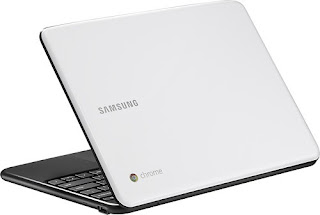
Samsung's Chromebook Has Become My Primary Computing Device

For all the noise I made last year about switching my mobile phone from iOS to Android, in 2011, I am thinking about and using ChromeOS even more than Android of late. As Android works through its growing pains as its handsets give way to tablets and as much news is unfortunately about the legal battles being played out with ecosystem partners battling entrenched competition as continued innovation, ChromeOS has trickled out with Samsung and Acer as its first OEMs. No doubt the earliest models aren't yet putting too much fear into established PC market share unit leaders, who have to be watching the developments with some interest, but as someone who lives on the Web, and has access to the first model from Samsung, it's clear to see how the concept of a Chromebook provides value. As I mentioned in my initial frustrations with slowness on the MacBook Air after I installed Lion, I have increasingly been using the Chromebook as my primary computer, and for good reasons, primarily centered around incredible battery life, easy access to connectivity, synchronization of content and rapid improvements.


Google Music, Reader and Google+ Updates Flowing In on Chromebook

Today, I ran a little experiment, not intended to be scientific, given the relative age of my 2009-era Macbook Air and the comparative newness of the Samsung Chromebook, but I decided to go power cord free on both machines, starting with the Air, using both normally, and see just how much different the experience was between the two. The Air, which I used much like the Chromebook, primarily for e-mail, social networking, playing music, etc., the battery ran down in almost exactly two hours of continued use (from about 9:25 to 11:25 am). After grabbing lunch and driving over to Teens in Tech headquarters in Mountain View, I brought only the Chromebook and used it through the afternoon and later in the evening, starting at 1 and continuing through about 9:15 tonight (with only about 30 minutes when I didn't use the laptop). The Air gave me two hours of battery and the Chromebook provided more than seven - a stark difference.

My Standard Chrome Apps, Bookmarks and Frequently Viewed Pages

But obviously there's more to the device than a nice battery and a relatively low price that puts the device in line with Windows netbooks and Apple's iPad - which detractors have said makes the Chromebook's Web-centric model fall short. Their argument, which I've bumped into time and again, is that by springing for about $400 to $500 for a souped-up Web browser, you might as well get a full operating system and hard disk thrown in to boot. Other folks, like Harry McCracken of Technologizer, have found adjusting to the new environment a challenge.

A Google-centric answer would say that the Web is the future of where traditional apps are going, and the opportunity to not have to worry about Windows' famous service packs and vulnerabilities is practically worth the price of admission. Bundled with a cloud-centric world where you can get all your files on any computer, theoretically, just where you put what document in which folder on your local disk seems somewhat antiquated.

The Rise of Web Apps Makes Web-Centric Computing Possible

The truth of course is that both arguments have merit. One's choice comes down to keeping what's worked in the past, with the desktop OS, application, folders and files structure intact, or making a calculated risk to try what's new as the story evolves in real time. And yes, the Web has evolved to the point that applications which once ran on the desktop now run in the browser. This means that when I take my Chromebook around with me, assuming Internet connectivity, I don't "just have a Web browser", but instead, I have access to all my documents, spreadsheets and presentations on Google Docs, all my email (with Gmail or MobileMe), my music on Google Music, my RSS feeds in Google Reader and access to all my financial activities between eTrade, Wells Fargo, Chase online and PayPal. If I want to rent a video, I can turn to YouTube or the Android Market. Obviously I can do all matter of shopping and social networking on the Chromebook as well. So I haven't exactly felt any kind of drop-off in productivity as the Chromebook has taken over upwards of 80% of my computing time.

My computing reality is that for the last several months, my Macbook Air has been getting increasingly slower, and the fan runs most all the time. Despite my trying to babysit the machine, the old truth that hardware gets sluggish the more you use it seems to prove itself once again. In contrast, as Chrome continually updates the browser and pushes incremental revisions that can get updated on the machine in a matter of seconds, it seems my device actually gets faster as it gets more capable. When I attended Google I/O this year, the two-day presentation was broken into two parts, the first day focusing on Android and the second day focusing on ChromeOS. It was day two that I found more impressive, more about delivering change, rather than establishing where the company's growing installed base was versus iOS in numbers.

Lucky as I am to have access to multiple environments, I am increasingly leaving my Macbook Air unused or behind in favor of the Chromebook thanks to the new device's much-improved trackpad, fantastic design, professional keyboard rivaling Apple's efforts, and the incomparable battery life, which I'd only previously seen attained from tablets like the iPad and the Samsung Galaxy Tab. The Chromebook has evolved from being a curiosity to playing a role as my main mobile device to my primary device. I still turn on the Macbook Air, of course, primarily for focused PowerPoint work, Photoshop, and my continued OCD over organizing and archiving email, but it's becoming the backup. Even if I were to head to an Apple store tomorrow and buy the newest, faster model, it wouldn't come with 3G connectivity, as the Chromebook does, it wouldn't come with ten-second bootup, and the battery life that really goes all day.

The Chromebook isn't for everyone yet, but it's a serious alternative that I can see being very attractive to workplaces looking to get an inexpensive uniform standard for employees, for parents getting first machines for their families, and for any mobile worker who wants the machine to go all day without chasing down power cords. There are certainly skeptics out there about what role the Chromebook plays in a world of cheap PCs and powerful tablets, or others still who think comparing a Chromebook to a Macbook Air is pure foolishness. But I vote with my actual use of these products, and I can only tell you what I'm seeing and enjoying. Samsung has done a great job with their first volley, and I'm spending all day in my Web browser - an extremely flexible one.

Disclosures as always: The Chromebook was provided free of charge to Google I/O 2011 attendees.
July 27, 2011 · 1 MIN READ · BY LOUIS GRAY

YouTube, Reader's UX Maven Jenna Bilotta Highlighted

YouTube, Reader's UX Maven Jenna Bilotta Highlighted

The Citizen, the local paper in Fayetteville, Georgia, offers a fantastic profile of one of the sharpest UX designers I've ever met.+Jenna Bilotta , who is the brains behind Cosmic Panda, the latest YouTube design experiment, previously flexed her creative power on Google Reader, where I've spent more hours over the last four years than practically any other place. Great to see someone without a CxO or VP title getting some well-deserved recognition.

Congrats, Jenna!

July 26, 2011

July 26, 2011 · 1 MIN READ · BY LOUIS GRAY

Podcast: Social Media, Athletes, Twitter and Google+

Podcast: Social Media, Athletes, Twitter and Google+

Athletes have taken to social media, specifically Twitter, in droves, using the network as a way to quickly connect with fans and press without traditional media filters. As Twitter became more visible and top celebrities from Hollywood took the network, athletes soon followed - with Shaquille O'Neal being among the first and biggest name to make the service part of his arsenal. With the unfiltered capability upon them, athletes have often made mistakes for updates to the network, and it's possible some regret saying many of the things they have. With the advent of Google+ from Google, Chris Peoples asked me to join him on a regular podcast he calls "The Peoples' Court" to discuss how athletes could benefit from Google+ and what to expect in terms of adoption.

As I mentioned on the podcast, athletes are not the fastest adopters, but if history repeats, they may follow the Hollywood celebrities to the network, and find value in limited distribution of content via Circles, dedicated Hangouts with family, fans or press, and unlike Twitter, the option to not only post in long form, but to edit content after it has been posted. Until Google+ is open to mass registration, I would expect uptake from athletes looking to use the medium for marketing to be slow, but once the doors open, it could be a very different story. Per usual, I had some audio difficulties on the call, so if you don't mind skipping through occasional static, you might enjoy our discussion, embedded below.

July 25, 2011

July 25, 2011 · 1 MIN READ · BY LOUIS GRAY

Techmeme Leaderboard Features Google+ Users

Techmeme Leaderboard Features Google+ Users

The content being created and shared on Google+ is quite good. So much so that many posts that have originated here have been featured as leading articles on Techmeme, the much-watched technology news curator led by +Gabe Rivera. While Gabe and team have had Twitter activity play a role in the site as well, no other social network (Facebook, FriendFeed, Google Buzz, etc.) has previously gotten this level of visibility.

Google Plussers +Paul Allen and +Danny Sullivan have seen their content shared on Techmeme frequently enough that both are listed on the Techmeme leaderboard, which tracks the most frequently carried sources on the site over the last 30 days.

You can see all Google+ stories that have entered Techmeme here:
http://techmeme.com/search/query?q=sourceurl%3A%22plus.google.com%22&wm=false

I would not be surprised to see +Vic Gundotra and +Bradley Horowitz be listed at other times on this list in the future.

/via My Google+ Profile.
July 25, 2011 · 1 MIN READ · BY LOUIS GRAY

Blogger Enables Static Pages to Link to External Sites

Blogger Enables Static Pages to Link to External Sites

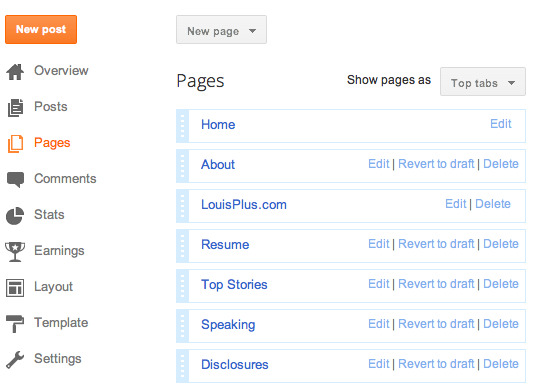
As part of my most recent blog redesign, I added a number of static pages which contain some of my most popular posts, my work history, disclosure badges and event history. Since then, Blogger revamped its publishing back-end, mirroring the design upgrade also seen at Gmail and Google Calendar, as Google extends its recent efforts to enhance the user experience. Somewhere in that mix, I overlooked the added capability to make these static pages not require native content on the blog, as they can also link to external sites. This option was pointed out by George Moga today on his blog, and I've already gone ahead and leveraged his tip.

If you are a Blogger user like I am, you can modify your blog template to include this feature by going to draft.blogger.com. Select "Pages" from your blog's overview section, and then hit "New Page" to make a new page, hosted or linked. There are two options - the first being a "Blank Page" for your own content, and "Web address" for the link itself. Simple.

My List of Static Pages on Blogger, Now With LouisPlus.com.

Linking to LouisPlus.com with a Single URL in Blogger

Recently, I acquired the domain name LouisPlus.com for my Google+ content. To be honest, my good friend Drew Olanoff (who also owns DrewPlus.com) bought it, but he promises he'll let me use it. :) In addition to the Google+ icon in my left sidebar, I've now added a link to LouisPlus.com in the header of my blog, thanks to this new redirect feature. So if you're somebody who wants to link to "My Company", or a social network of your choosing, or really anywhere, it's very simple. No hacking needed.
July 25, 2011 · 2 MIN READ · BY LOUIS GRAY

Twitter Search Gets Modern Facelift, Index Still Limited

Twitter Search Gets Modern Facelift, Index Still Limited

Since Twitter acquired Summize way back in 2008, the company's search engine has been one of the biggest question marks - for while use of the network has risen dramatically, the company has been unable to keep historical data beyond a few days. Recent enhancements, which Twitter termed personalization, help to separate quality updates from junk, but for the most part, the situation with the search engine remains the same. Today, the search engine saw flickers of life with a design revamp that brings the front-end of the engine in line with Twitter's newish Web interface. It also brings forth the "Promoted" search queries which the company is relying on for revenue.

Over two years ago, I talked about how Twitter's search engine became increasingly less useful over time thanks to a shrinking index and oddities, like being unable to find any tweets from specific users, or missing data, even when search operators were used. At the time, I asked if this would be a "temporary blip" which I hoped would "come back soon", but the company has prioritized other features. In the meantime, a deal with Google to provide realtime updates in their search results lapsed. So we're still stuck with the few days of results, just in a prettier format.

The new Twitter Search Front End, Including Top Trends by Your Geo

In addition to the cleaner look of Twitter search, the service also has a new example pop-up for search operators. While the practically ancient "flight :(" example held over from Summize remains, new are example searches including "from:alexiskold", "to:techcrunch" and "@mashable", nods to the GetGlue founder and top blogs who give Twitter a lot of press.

Also included? The optimistic operator: "superhero since:2010-12-27" which says it will return results "containing "superhero" and sent since date "2010-12-27" (year-month-day)". If you do run that query, you'll get responses dating back all the way to July 23, 2011. Where the rest of the 7 months' results are is anybody's guess.

Search Operator Options on the New Twitter Search

Despite one's social networking preferences, the data inside Twitter is extremely valuable. The company really could have a lead on being the realtime pulse of the planet. This makes prioritizing new tweets the most important, but I'd bet the world could benefit from more than a week's worth of content.
July 25, 2011 · 1 MIN READ · BY LOUIS GRAY

Google+ Follower Counts Jump, Due to Simple Circles

Google+ Follower Counts Jump, Due to Simple Circles

A lot of people here, from +Brett Crosby to +Erica Joy, +Loic Le Meur and more have noticed the number of people adding to them in circles has caught up to or exceeded their followers on Twitter, despite Google+ being out for just under a month, while Twitter just celebrated its 5th anniversary. Many of us joined Twitter 3-4 years ago. +Liz Gannes of AllThingsD has an analytical post today on just why she and her connections think the counts are the way they are.

My two cents: Adding people to Circles is fun and simple, and you know you can organize people who you might view less often, while with Twitter you put everybody in the same bucket, so you pay a tax for connecting. Also, the engagement here is such that we early users are enthusiastic about following the path forged by other social networks, and finally getting the equation right.


(See: Google+ Really Has the Hang of the Follower Count Game)


/via My Google+ Profile.
July 25, 2011 · 1 MIN READ · BY LOUIS GRAY

eWeek Discusses Algorithmic Filtering, Google+

eWeek Discusses Algorithmic Filtering, Google+

+Clint Boulton of eWeek extends the conversation that +Tom Anderson and I initiated last week regarding Google+ and algorithmic filters. I'm still not used to seeing my name in a headline at such a great publication as eWeek, but I assume it's the result of my talking so openly about a product lots of us are excited about.

Thanks for the post, Clint.

See: Louis Gray Argues for Algorithmic Filtering on Google+

/via My Google+ Profile.

July 24, 2011

July 24, 2011 · 1 MIN READ · BY LOUIS GRAY

Patents: True Innovation or Trolling?

Patents: True Innovation or Trolling?

When I first started working in the Silicon Valley, I held patents in the highest of esteem. I was in awe when I would see inventors' walls speckled with plaques, and believed they reflected true innovation. Later, the companies I worked for went through the somewhat arcane system to have their own discoveries recognized. But in 2003, NetApp acquired a set of patents from Auspex and sued BlueArc (where I worked). Though our products were obviously very different and we were not infringing, the battle took lots of our employees' time, the case was used against us with customers, and millions were spent in legal fees, before it was dismissed in 2007.

Now, the words I think of after patent are either "suit" or "troll". I see how Apple, a company I once held in the very highest esteem, is attacking companies like Samsung, HTC and others with patents made well before the devices in question were created. I see others defining basic elements of Web services and cringe at suits to come. The system is broken. +Chris Sacca talks about one firm, Intellectual Ventures, who will probably be at the center of some of these future fights, in a detailed article on NPR.

(See: When Patents Attack)

Interested to your own thoughts around patents, invention, legalities and innovation, or what experiences you've had.

/via My Google+ Profile.

July 23, 2011

July 23, 2011 · 1 MIN READ · BY LOUIS GRAY

Automating Spam Removal Is A Tricky Challenge

Automating Spam Removal Is A Tricky Challenge

Automating the detection and removal of spam accounts, fake profiles and other similar tasks is a tricky one. Assuming you have a 99% detection and response rate, the 1% "false positive" can be a humongous headache. With many people debating the right approach to taking down accounts, flagging spam and the like as this network evolves, check out this great article from the oddly titled "Laughing Meme".

See: Cost of False Positives on Laughing Meme

/via My Google+ Profile.
July 23, 2011 · 1 MIN READ · BY LOUIS GRAY

Cracking the Code on Logo

Cracking the Code on Logo

In elementary school, we had about 4 or 5 ancient Apple II/e computers, which were used to keep kids busy if they finished tests early, or for running the LOGO program. While many of you may remember LOGO, for the younger set, it entailed a triangle shaped "Turtle" that performed the actions you told it, including going forward a certain number of spaces, rotating a certain number of degrees, and so on. If LOGO was programmed correctly, you could make all matter of designs.

Our science teacher at one point gave us a simple task - to make a perfect right triangle with LOGO. A lot of people came close, but it was hard for our elementary school brains to tell the turtle to draw a line that was precisely the right length hypotenuse. A few decimals here and a few decimals there, but nobody quite got it.

Then I realized we were doing it the hard way. I told the turtle to go forward 30 (a standard measure), turn right 90 degrees, go forward another 30, making the two straight edges, and then entered the command of HOME, which made the turtle do it all by itself. I then hit HT (which hid the turtle) and on the screen was that perfect right triangle. The science teacher was annoyed, but had to admit I had cracked the code.

/via My Google+ Profile.

July 22, 2011

July 22, 2011 · 2 MIN READ · BY LOUIS GRAY

Sonos Shrinks Wireless Sound Systems With Play:3

Sonos Shrinks Wireless Sound Systems With Play:3


Sonos' mission is to deliver the highest quality music from any source to any part of your home, wirelessly. The company's beautiful Apple-like speakers have played a major role in my home's decor for the better part of 18 months, ever since I got my first S5, later added on two more units, and even a wireless dock to play songs from the iPod Touch. As new services like Rdio and Spotify have debuted, Sonos has been lightning-fast to support them, to get users fast access to their music. If there have been any complaints I've ever heard about the company's products, they've been price related. Something about premium quality and premium prices going hand in hand... but this week the company took a step down in the market with the introduction of the Play:3 line, which has a smaller form factor, fewer speakers, and a new profile which looks great if posed either vertically or horizontally. The new pricepoint is only $299, which should make the units even more attractive to consumers and audiophiles.

As someone who has long ranted in favor of Spotify for the better part of two years, I'm equally as effusive about my Sonos equipment - which plays a visible part in social gatherings, and entertains the kids who need to get their wiggles out by dancing to techno from all sorts of sources, including not just the aforementioned Spotify and Rdio, but also Sirius XM, local radio and topical content from the Web's deep library. Managing the now four devices (3 of the 5's and one of the 3) is simple with the intuitive software for both desktop and mobile, and it still amazes me to have the near instant response from an action I take on the app impacting the wireless speakers anywhere in the house.

How small is the Play:3? My 10-month old can straddle it.

With the introduction of the Play:3, Sonos is rebranding its equipment in a much simpler way than in the past. Gone is the letter and number pairing of the S5, replaced by the Play line of players and the Connect line, including the ZoneBridge and ZonePlayers that turn existing speakers into wireless systems, or connect your routers to your Sonos equipment.

When the Play:3 arrived at our door this afternoon, the twins opened it up and said "Dancing!" when they first saw the unit. So yes, they know what it's for. In about 3 minutes, the device was connected to power, added to my desktop software and streaming music. It's simply not fair how easy it is and how good it is to get such high quality sound from such a small device. It's a smart extension of the product line I've invested in after first getting introduced to Sonos early last year. Huge win.

Disclosure: The Play:3 was provided free of charge via Sonos. I've previously purchased multiple Play:5 machines.

July 21, 2011

July 21, 2011 · 1 MIN READ · BY LOUIS GRAY

Look Here, Macintosh...

Look Here, Macintosh...

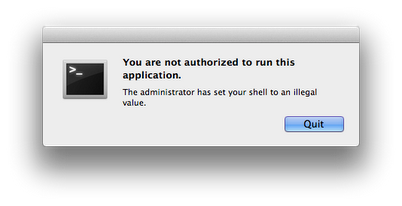
Look here, Macintosh. I guess you saw my blog post and are a little mad at me. All I wanted to do was go to terminal, say "top" and find out just what was eating all the memory and CPU. And now you won't let me? Bring it on. I've got two Chromebooks over here saying you're no longer the king.


July 21, 2011 · 4 MIN READ · BY LOUIS GRAY

Lion's Big Bite Took the Air Out of My Sails

Lion's Big Bite Took the Air Out of My Sails

Like a good number of fast-moving Apple fans yesterday, one of the first things I did with my day was install Mac OS X 10.7 (Lion). The update, weighing in at just over three gigabytes, downloadable from the Mac app store, delivered a crisp new UI, some nice new features including Mission Control and an iOS-like approach to finding all available apps and files, a new take on scrolling, and unfortunately for me, at least in my case, a ton of slowness. From what it looks like, my poor refurbished 2009-era MacBook Air simply wasn't macho enough to run Lion - even after I weighed my options and ran Disk Utility for the better part of two hours to ensure nothing nefarious was keeping the poor laptop down.

While my MacBook Air has become increasingly slow of late, and had already been sending me increasingly to my Chromebook as an alternative, Lion pushed it over the top. Warnings about Lion probably needing at least 4 gigabytes of RAM, while my Air has a pesky 2, look to have been founded, as the system often became unresponsive and bugs appeared in a number of the apps I tried, including the venerable Microsoft Office suite.


Needing to prepare a presentation for a new client this afternoon, I was working late last evening on the MacBook Air, with only PowerPoint running. All other applications were closed (to conserve memory) and even that wasn't enough. Seeing I was getting nowhere, I bit the bullet, and uploaded the PowerPoint to Google Docs. I closed the Air and then opened up the Chromebook to work from there. Despite my high use of Google's products, I've never used Docs for presentations, and the move wasn't taken lightly. You know I'm not a heavy Docs user, or I'd probably have already told you that some time. After years and years of PowerPoint training, I'm surely much more creative with Redmond's software, even if it's not my favorite.

I haven't opened the Air since. No doubt I will, once I man up and stop being frustrated with the machine, but it's a little maddening to be obsoleted in just under two years, feeling like what I really ought to do is give Apple just over $1,500 and upgrade again to the latest and greatest Air, with an even faster CPU, more RAM, and a greater capacity Solid State Disk (SSD).

I initially got the Air in January of last year, knowing that it would be a bridge to a more cloud-centric device, especially as the hard disk came with about 100 gigabytes less capacity than my previous model. Initially, I made all sorts of attempts to avoid putting native applications on the Air, but a Microsoft Office here, an Adobe Creative Suite there, and that plan was done for in due time. At last count, the device was about two-thirds full yesterday afternoon - not in bad shape, mind you, but a dozen or two gigs beyond what I had hoped.

When I got the CR-48 from Google as part of their field trial last December, the device seemed initially handcuffing, as I felt trapped in the browser. As the hardware improved with Google supplying new drivers, and Chrome got faster, I started taking the device everywhere outside the house, and have probably been using it the majority of the time inside the house of late, especially as the Air has slowed. Almost too conveniently, on the same day as my Air was being deflated with Lion, the Samsung Chromebook from Google I/O arrived on my doorstep, giving me a sleek alternative to the air with real hardware polish. Within minutes, I'd moved my Google profile onto the new Chromebook and passed the CR-48 to my wife.

It was this new Chromebook on which I gave today's presentation - the same one that I haven't had to plug in since I first turned on the device this morning, and promises more than two hours' battery life remaining with about 33% capacity. I honestly couldn't tell you how much RAM it has, and I know internal storage is dinky, but the near-immediate bringup, followed by a successful preso this afternoon, has me seeing that as beautiful as Lion is, the makeup may be caked on thicker than Tammy Faye Baker. Part of my Apple fanboy inside is crying out in pain as I hope in vain that the Air can get restored to its former vibrant self, but I have to think this particular system upgrade was too much for it. It's fantastic to have an alternative arrive on the doorstep that very day. Obviously, the price (free) isn't bad either, but I wouldn't have even touched it, let alone stayed on all day, if it didn't deliver when I needed it to. My Macbook Air and I, on the other hand, are going to have a nice long talk about the future - even if it means a clean install or a data wipe, which doesn't sound very Mac-like.

Obvious Disclosures: The CR-48 was part of a free pilot program. The Samsung Chromebook was delivered free to Google I/O attendees. The Macbook Air I paid for (and got reimbursed from Paladin).

July 20, 2011

July 20, 2011 · 1 MIN READ · BY LOUIS GRAY

Upgraded Chromebook Syncs Quickly

Upgraded Chromebook Syncs Quickly


I just took a few minutes to power up and turn on the Samsung Chromebook that arrived this afternoon after Amazon shipped it post Google I/O. Now that it's set up, thanks to Google browser sync, it's practically a clone of the CR-48, with identical bookmarks, themes and extensions.

As for the hardware, it's very light, sleek, and classy. Great trackpad. Nice keyboard. Now all I have to do is delete my account on the CR-48 and pass it over to my wife so we both have Chromebooks to match our Macs.

While Apple may not be a huge fan of Samsung, I've grown to be over the last two years especially. They make great TVs, tablets, phones, laptops... you name it. If you're buying in to the Android and Chrome ecosystem, they do a solid job.

/via My Google+ Profile.
July 20, 2011 · 1 MIN READ · BY LOUIS GRAY

Google+ Reaches Twitter Followers 50x Faster

Google+ Reaches Twitter Followers 50x Faster

It took me three years of activity on Twitter to reach 19,000 connections. On Google+, it has only taken three weeks. While follower counts are not the most important thing to focus on, it is a definite indicator of momentum. Just wait until these doors fly open to the world and they find this place without limits.

/via My Google+ Profile.
July 20, 2011 · 4 MIN READ · BY LOUIS GRAY

Real Valley Stories: Nearly Quitting Over URL Structure

Real Valley Stories: Nearly Quitting Over URL Structure

Editor's Note: Part 4 in an irregular series of stories from my 12 years in Silicon Valley. Part 1 discussed interviewing for my first job. Part 2 discussed the role. Part 3 talked about my boss getting let go while I was retained by the sister company.

At my second job in the valley, I had the title of Web Marketing Manager. It meant I owned the company's Web sites, including content, look and feel, search engine optimization, and more. Beyond that, given it was a startup, I did my unfair share of quality assurance, product planning, including my first marketing requirements document (MRD), which was terrible, and even picked up the phone to answer support calls when they cascaded to me. The company initially started out selling a web-based fax service, which was the majority of revenue for the entirety of my two-plus years there, but that line wasn't particularly sexy, and it wasn't the end goal, as we later rolled out a Web-based phone conferencing service, with Web meetings and advanced desktop sharing. The eventual goal was a suite of Web-based office products for remote workers and Web-centric employees. We were probably ahead of our time, and understaffed, but in the later stages of the dot-com boom, we were scrappy and we tried to do a lot with miniscule budgets.

After much testing, we readied the launch of our Web conference calling product in January of 2000, called PhoneCube. The application had gone through all manner of review on all the top browsers of the day, and it was good to go as far as version one was concerned. So too was all the copy for the Web site, including frequently asked questions, product overview, pricing tiers, and all manner of screenshots, complete with fake names and phone numbers. As we readied launch, my colleagues and I uploaded the new content to a test server and started clicking around to make sure all the links worked, images displayed and so on.

Immediately, as I clicked through to the product page, something caught my eye. The page loaded as it should, but the URL structure was not what I'd expected. I anticipated that clicking on Products would lead to a clean URL like www.phonecube.com/products or at worst, www.phonecube.com/products/index.html. Instead, the URL had an additional directory which looked like www.phonecube.com/phonecube_site/products/index.html. What was this "phonecube_site" deal? So I went to my boss and asked, saying we could easily make a soft name alias to hide the unnecessary and ugly directory. The two of us then went to the lead engineer on the project, who, folding his black and gray beard upward toward his lower lip as he talked, explained that this was impossible.

What had happened was that our Web site and our application were running on the same server, in parallel directories, with the phonecube_site directory showing the Web site and the phonecube_app (or some other similar name) directory powering the application itself. All of the calls to images and other code in the application had hard-coded URLs, so masking the phonecube_site directory would require dramatic work to the app itself, and delay the project.

I was incredulous. I thought the new URL structure was ugly, and it was something all our visitors would see as they clicked around our site. It would be ugly to link to, ugly to share via email, and made us look bad. In response, my boss (the VP of Marketing) said that many popular Web sites on the Internet, with Amazon being the clearest example, had ugly URLs, and yet they were successful. I thought the excuse that other sites were worse didn't really make us better. As far as I was concerned, the URL was as important as the words on the page, and as I argued my case, I started to feel that if the Web Marketing Manager who theoretically owned the Web site couldn't even have impact to how the URLs would be displayed, that my role was pretty much toothless.

After much discussion, with my viewpoint clearly being in the minority, I had to cede the position. My vain request for clear URLs that were as human readable as machine readable didn't persuade my team, and I was going to have to live with it. This realization that I could not even convince my boss to back me up on something I thought was so clear and obvious was incredibly frustrating, and I remember driving home that night, late, fuming, thinking I should just quit if I couldn't even stand up for our users and common sense. But, luckily, I decided to display a rare moment of maturity, and I came back the next day and went to work. I don't know that my boss or colleagues realized how seriously I took the fight and how I had seriously considered leaving, my powerlessness being made so transparent.

Since that time, URLs have clearly gotten uglier, and most folks have survived. I've had other conflicts at other companies, and haven't always gotten my way. Sometimes the frustrations are short-term and others long term, but what the episode did show me is that no matter of ranting and raving can push people who are certain they are right, especially when the benefits of change don't outweigh the drawbacks. I've seen other people try to hold fast to a hard line on other little things like fonts, graphics, logos, splash pages and more, where exercising a little flexibility and respect for the other person's point of view can do wonders. But back when I was only 22, getting shot down and losing a product decision I thought critical was demoralizing indeed.

July 19, 2011

July 19, 2011 · 7 MIN READ · BY LOUIS GRAY

Google+ & Other Social Networks Need Algorithmic Filters

Google+ & Other Social Networks Need Algorithmic Filters

Google+'s entry into the social networking market presents a new slate of opportunity for tech geeks who have been unsatisfied with leading offerings from Facebook and Twitter. The network's initial launch has been intriguing for two major pieces, namely the need to recreate one's social graph from scratch, including manual sorting, and secondly, as noted before, not starting with aggregation of third party content. The clean slate approach presents optimistic participants with a hope to "do things right" this time, and not fall into the limitations of networks past. Given Google's science-driven history, smart folks have also cautioned the company against leveraging algorithmic filters that might surface some content in the place of others.

The most visible argument was that from Tom Anderson, MySpace cofounder, who said, "Can a company so enamored with the power of algorithms and machine learning, let the user take control?", adding "... I'm worried that Google is going to make a misstep and ruin the service," through leveraging algorithms to cut signal from noise. While I have enjoyed Tom's resurgence to visibility and insights into early use of the network, I think the conclusion he reaches needs some work. Where there is signal, there is noise, and what's been missing in all networks to date is the right approach to surface quality content, which no doubt feeds into Tom's comments.

The vast majority of social networking content is consumed in reverse chronological format, with the most recent content being at the top. This is true for Twitter and all of Twitter's clients, it is true for Facebook's "Most Recent" feed, it's true for LinkedIn's news feed, and is mostly true with others like FriendFeed and Google+, which for the most part, sort content by the most recent activity - meaning older posts can be "bumped up" with additional comments. FriendFeed fought this intelligently over time, letting older posts eventually float downstream, while Google Buzz fought a similar challenge as the most visible posters' active threads initially took too much screen real estate.

In contrast to the chronological view, one can find intelligently filtered streams on Facebook, with the service's news feed, and in Twitter's search results, which try to show you "Top" content, and not just "All" content, dependent on the user sharing updates. But Facebook's approach, from my own understanding, relies heavily on your previous interaction with a person, augmented by that post's activity, which can bubble it to the top - independent of context. This means that if, for example, I share two posts, one on Apple's blowout quarterly earnings, and the second showing a cute picture of Braden at the supermarket, the posts may carry equal weight, assuming we are BFF. You can see this all the time in your own news feed on Facebook, as seemingly "random" posts from your friends surface to the top, while friends outside your top two dozen interactions almost disappear.

An algorithm that surfaces personalized content that does not take into account the many multiple factors that indicate interest, from the person sharing the content, to the content source, keywords, headline, author, time of day, time since publishing, the individual(s) commenting on that message, the keywords in the headline in combination with the author and/or the source, etc. simply isn't enough. The truth is that each of us does this automatically, and what the world needs is social networking that thinks like we do. For example, if you like financial news from the Wall Street Journal more than you like it from GigaOM, then similar stories from both should be weighted this way. But if you prefer articles on stock from Om Malik more than you do from Mathew Ingram, that too should be determined. The human brain is a very complex object indeed, but just because something is hard doesn't make it something you don't want to try.

Which brings us back to Google+. Initial content in any network excitedly rallies around itself. Soon following, one finds a backlash against meta posts, a call for the mainstream to enter the site, a fear for what happens when they do, a backlash against top users and so on. But once the fun of that is done, people behave like people and want to see interesting stuff. One person's noise is another person's signal, and unfortunately, very few people can be constantly logged in to a service. This means that when they log back in to a service, they shouldn't be forced to see just the most recent things that have happened, but instead, the best things that have happened - the content that is most important to them as an individual, the pieces of content that they absolutely did not want to miss. Because if something is especially important and relevant to you as an individual, that it came out two hours ago does not render it useless.

The advent of Google's much-discussed Circles delivers bidirectional manual filtering of people. It's bidirectional in that you are consuming from a unique list which you created, and you are sharing to a unique list of people which you created. If you create a list of "My Poker Buddies" and another for "College friends" and another for "Tech News People", the truth is that your poker buddies are going to talk about things other than poker, your college friends are going to talk about new stuff, and your tech news friends are going to talk about whatever they want... all day long. So the circles are porous. Simply naming one "Baseball" won't force people to talk about baseball, and until search is fully implemented beyond Sparks, there is no great way to find that on the site.

Another common fear about filters (which we discussed when responding the filter bubble) was that preferences are reinforcing, and that you see only what you want to see, at the exclusion of all else, that this leads to a dangerous space where you don't get access to alternate opinions. Again, I argue that we are very early in the game of finding high quality algorithm-driven personal filters for news, for social networks, or anything else we use that could benefit from personalized ranking. The solution to a smart algorithm that learns your preferences implicitly, rather than polling you explicitly for what you say you like will mean that you don't have to sift through the dozens or hundreds of posts that you deem off-topic, but instead that you get the best delivered right to you.

Unfortunately, while many companies have talked about this possible panacea, most all of them are cheating through collaborative filtering, and assuming that your social graph is smart enough to determine what is the best content for you. It's simply not true. Your interests are not my interests, and just because I like a specific topic on one day doesn't make it the most important thing the next. What is needed is a strong body of record that is tied to you as an individual, applied to your stream in real-time, helping you avoid the mess and find the best.

Google has traditionally been very cautious, going against conventional wisdom by not leveraging behavioral targeting as much as they could, by going out of their way to not overuse your Web history, your email activity, or in any other way, abusing the relationship you have with them and your content. With Google+, on both mobile and desktop, they have a new opportunity to do this correctly, continually learning more about your interests and activity to serve you the most relevant updates while avoiding much of the cruft that has plagued other networks, specifically Facebook. Having worked closely with my6sense for the better part of two years, I've seen directly how smart algorithms based on implicit feedback can make useful high quality streams out of what would more commonly be considered noise - and I've seen many people on Google+ and Twitter call for the same such filtering engine to be applied.

As Google+ gains visibility with the service opening up to more users, and less geeky users, it is inevitable that the stream content will be diversified and become more "noisy". Initial users will no longer be accepting of the content, excited just to use something new, but they will want the network to provide increased quality and connections than the status quo. While it's expected Google will eventually do a tie-in with casual gaming on a dedicated games site, the general hope from the community is that game-related info with not pollenate Google+. It's well-known that game info is a common polluter of Facebook streams, even if you've done your darndest to block all the services that hit your feed.

Tom's approach is laudable. He sees a new network with great promise, and is scared that Google will fumble it away. But I believe his conclusion is not perfect, for if done correctly, intelligent algorithms can make the network the most personal and most relevant one on the market. What Google+ needs to deliver is not just that it exists, but that it is differentiated and better. Why not use the smarts and information the company has to achieve just that?

Disclosure (as always): I am the VP of Marketing at my6sense, which provides personalization of news and social streams (but not yet Google+).
July 19, 2011 · 1 MIN READ · BY LOUIS GRAY

Google+: Not a Product In Isolation

Google+: Not a Product In Isolation

Google+ may look a lot like other social networks where we've participated before, but it's not a product in isolation. Every piece has been designed to help push the industry in a new direction of interoperability and selective sharing. Edd Dumbill of O'Reilly gets it and breaks it down.

Much of the power of Google+ becoming the social backbone comes from intelligent focus on standards, from people who have pushed for standards long before they joined Google - helping move the industry from the inside out. Read the article.

/via My Google+ Profile.

July 17, 2011

July 17, 2011 · 1 MIN READ · BY LOUIS GRAY

My Top Ten Favorite Google Products (2011)

My Top Ten Favorite Google Products (2011)

Google makes a ton of products. Almost two years ago, thinking about it, I posted my top ten Google products at the time. Google Reader was #1, Blogger was #2 and FeedBurner was #3. Since then, G+ has come into play, I switched to Android and Chrome is on fire. It's time for a rewrite.

The Original Post from Sept. 2009: My Top Ten Favorite Google Products

Here's what I would list now. Eager to hear your own top 3, 5, or even 10.
  1. Google+ (Obviously, this is my start page, I am here constantly)
  2. Android (The mobile OS runs my favorite tablets and phones)
  3. Google ChromeOS (Living in the cloud is a game changer)
  4. Blogger (The easiest, most flexible and stable blogging platform)
  5. Google Reader (Still the best place to follow hundreds of sites in one place)
  6. Google Search (The gold standard for finding anything)
  7. Gmail (Finally my default email, and archive. Buzz is a plus.)
  8. FeedBurner (Takes my blog to the rest of the Web, powered by Pubsubhubbub)
  9. Google Voice (Syncs my phone to the Web with auto-blocking of spam calls)
  10. YouTube (If it happened and is worth watching, it's here. Now with movies too!)
Things have obviously changed in just two years. Android, ChromeOS, Google Voice and Google+ were not on my radar much only a short time ago, and now they're essential. Curious to your own insight and what major services (Analytics, Maps, Earth, etc.) I missed.

/via my Google+ Profile.

July 15, 2011

July 15, 2011 · 2 MIN READ · BY LOUIS GRAY

ChromeOS Now Supports Multiple Displayed Windows

ChromeOS Now Supports Multiple Displayed Windows

In the latest build of ChromeOS, version 751.0 for those keeping track, running on a new version of Chrome 14, the operating system has introduced a new windowing feature that lets you put multiple tabs side by side instead of the previous standard where new windows either became tabs in the browser, or went to a new screen altogether. Now, you can take notes on one side of the screen and read email in the other, or run apps on one side while keeping your favorite social network on the same screen. It brings the system even closer to more traditional OS's like Macintosh and Windows, with the exception being you're not exactly dragging windows around a screen in an up/down fashion, only splitting them left versus right.

The feeling of the new windowing effect is more akin to Apple's Coverflow display instead of being reminiscent of spaces. This means no more copying text from one screen, tabbing over to another and pasting, but also no secretly running ESPN in one screen to stay tuned to the game while working on a Google Doc in the front.

Running Multiple Windows on the CR-48 In ChromeOS (Gmail and G+)

The windowing effect comes courtesy of an icon in the top right corner in what's starting to look like a menubar, with the time, WiFi signal, battery status and now a small rectangle. When running multiple windows, you can Maximize to a full screen mode, or Restore to go back to the previous status. The two foreground windows can split screen, divided in the center, which you can pull left or right to give one more or less space. Third windows and beyond get a small sliver on the right, in the order they were opened.

Writing The Blog Post In a Notepad While Checking Gmail on ChromeOS

You can still Alt-Tab between open windows, while hitting the Window button on the keyboard (for the CR-48 at least) toggles between Maximize and Restore, instead of switching windows entirely, as it had before.

The option to have multiple windows in one screen was one that I've been waiting for, since accosting Google's Don Dodge at Google IO about the feature following day two's focus on ChromeOS. For us press people, having one window to take notes and another do post those notes or do some other task is very helpful.
July 15, 2011 · 2 MIN READ · BY LOUIS GRAY

Teens in Tech's Inaugural Incubator Companies Revealed

Teens in Tech's Inaugural Incubator Companies Revealed

Only a few weeks away from the August 5th Teens In Tech Conference at Xerox PARC, in partnership with Meshin, a half-dozen companies founded and run by teens are preparing their sites and products for unveiling in what should be a fun Demo Day. The companies themselves were revealed earlier this week, providing a sneak preview of what you can expect should you attend. While not on the scale of Y! Combinator or 500 Startups, what the teams lack in number, they make up for in spirit and a lack of inhibition. They do believe they can accomplish anything they set their minds to, and with some aid from the more seasoned of us who can help provide some mentorship, the teams are converting their projects from whiteboards and ideas to shipping and availability for the public.

While you will hear more about each of the companies face to face at the conference, and in follow-on press, a quick summary of the participating teams is below:
  • Bubbls, founded by a team from Palo Alto, is a new social mobile application that taps into geolocation and lets your friends know when you are available to hang out.
  • BuyNomial, based in Oakland, is a new site that helps youth set savings goals through creating a wish list of products and working to budget wisely.

  • CM Studios, from Atherton, is creating a fun new game for iOS and soon Android, involving zombies.

  • Codulous, founded by a group from Santa Cruz, is a smart Web-based code editor that lets engineers work in the cloud, and synchronizes to multiple devices, including desktops, for remote access.

  • MySchoolHelp, the most remote applicant, based in White Plains, New York, but spending the summer in the Bay Area for the purpose of participating in the Teens in Tech incubator, is setting up a collaborative site for high schoolers to share class notes and get rewarded for high quality work.

  • Workcrib, from Walnut Creek, is working to provide an easy way to showcase workspaces online.
There are some obvious themes in this year's participants, the inaugural class of companies - as some are leveraging the fast growth in mobile and social, while others are tapping into the cloud for improved sharing and collaboration. The activity I've seen face to face with many of the teams in recent weeks has been quite impressive, and they can lap me in the geek front, which is a good thing indeed.

All will be presenting at the August 5th conference at PARC. As noted Monday, I have a discount code I hope you can leverage. Sign up at http://2011teensintech.eventbrite.com/.


Disclosure: I am an unpaid advisor to Teens in Tech, and have a small equity stake in the company.
July 15, 2011 · 2 MIN READ · BY LOUIS GRAY

Google's Data Liberation Front Frees Your +1s

Google's Data Liberation Front Frees Your +1s

In a new and innovative way to leverage the company's new Hangout feature as part of Google+, Google's Data Liberation Front held a small press briefing with a handful of tech journalists today, walking them through why the company is focused on leveraging open standards and helping users get their data out. Alongside the discussion, engineering manager Brian Fitzpatrick said the company has extended its exports to include the +1s you've made for Web sites - a small bump obviously, but one that demonstrates their seriousness about making getting your data out of Google as easy (if not easier) than it is to get it in.

Without speculating on other company's practices (namely Facebook), Fitzpatrick asked those of us participating if we would recommend a restaurant which locked its doors to prevent us from leaving after we sat down for a meal, or if we would recommend people rent an apartment that demanded it keep your furniture and family photos once you moved. The obvious answer is of course not... and Fitzpatrick said the same should be true for your online content. He recounted how when the Data Liberation Front first started with Blogger, there were some internal concerns at Google that users would leave the platform en masse for WordPress or other solutions, but in fact, they instead regularly downloaded content but kept posting - using the exports as local backup. (This is what I do as well)

Google Takeout Liberates Your Content from Multiple Services

Fitzpatrick pointed to Google Search as an example of not locking in one's data, as users, with many choices, will use the engine and can go to any other when they like. But with many online services, content goes in and doesn't come out. As I've demonstrated with my own personal backup of my Facebook wall and photos, you can get your data out of the social network, but it's possibly not configured very simply to move to another platform altogether. This is a main focus for the Data Liberation Front team, said Fitzpatrick, who said the effort is made to point to XML, Activity Streams and Microformats wherever possible, letting your data be interchangeable within services.

Downloading My +1s is a Mere 25KB.

Now that My +1s are Downloaded, I Can Move them Elsewhere

Lost in much of the coverage of Google+ a few weeks ago, the Data Liberation Front introduced its Google Takeout policy on the same day, making it easy to download data from multiple services and take them elsewhere. This list includes your +1s now, as well as Google Buzz, your Circles and Streams from Google+, and Picasa Web albums. As they mentioned at the time of that launch, if they make it simple for you to get your data out of the company, they have to work harder to keep you in.
July 15, 2011 · 1 MIN READ · BY LOUIS GRAY

The Cloud Makes Using Even Windows Simple

The Cloud Makes Using Even Windows Simple

In an odd twist, Google is making it even easier to use Windows than ever before. While that sounds silly, the move to the cloud means that if you bring Chrome with you and you use many of Google services (like Plus, Reader, Blogger, etc), the computer and OS are practically invisible.

So today I'm packing my HP and wearing my Microsoft shirt, but that doesn't mean I don't have to really touch any Microsoft software. Note the bookmarks in the toolbar pretty much get me most of what I need. That's what the cloud is all about.

Using All My Products In the Cloud on Windows


July 14, 2011

July 14, 2011 · 4 MIN READ · BY LOUIS GRAY

Spotify's US Launch Goes Well as Listeners Flock for Invites

Spotify's US Launch Goes Well as Listeners Flock for Invites

My experience with early access to Spotify in the US has been nothing short of game-changing in terms of what I expect from my music, and after my having said so for about two years, I know a good number of folks got fatigued of the promise, and just wanted the company to ship already. Today, as was much-anticipated and well reported, Spotify did open its doors in the US, bringing the massive on-demand music library for desktop and mobile devices to the world's biggest music market. The service was open via invitation only, as many found themselves refreshing their email boxes, waiting for the invites to arrive. Luckily, thanks to my ongoing relationship with the company, especially their Head of Special Projects Shak Khan, I snagged a dedicated URL with invites and passed them around on Google+, Twitter and Facebook before I had to zip off to something resembling a real job this morning. The link is here: http://www.spotify.com/us/louisgray/

In case it wasn't obvious, go get it ... now. I'll wait.

After much waiting and an equal amount of hyperbole, the arrival of the music app took on a life of its own, overshadowing the actual delivery of a new challenger that could change the way many of us consume and share music - as much as Napster and iTunes did in their own times.

Quickly stated, Spotify is a streaming music application that offers the deepest legal library of music available for multiple platforms. Unlike the lock-in faced from the iTunes/iOS side of the world, I can get to my Spotify library from any Mac, Windows or Linux computer, and any Android or iOS device. In addition to having incredible instant access to music with almost zero buffering, even if I have never listened to a track before, I can link Spotify to my Facebook social graph, share tracks and playlists with friends, and browse their own listening preferences to discover new music.

Spotify Highlights My Artists, Tracks, Friends, Starred Songs and Much More

In the last two years, when I heard of a new band or a new album, invariably I checked Spotify to see if the music was available there first, and in almost every case it has been - often weeks or months ahead of iTunes, Amazon and others. I often put Spotify to the "name an artist or song" challenge to friends who tried to find some lesser-known band to stump the service unsuccessfully, and then would skip to a later part in the song without any hiccups.

The Crystal Method playing on Spotify. Note the Scrollbar's Size for So Many Tracks!

Through the wait for Spotify's arrival, much attention was placed on the service's plan to continue with a free option for listeners, which scared the heck out of music labels. After much finagling, they landed a way to offer a free, entry price and premium price for the service. Considering premium is only $9.99 a month, it's a steal, period, and I'd expect serious conversions to the higher models. Spotify has also reportedly provided upwards of $60 million in music royalties to artists just in Europe alone in the previous year, putting them second highest behind iTunes. Add the USA to the mix and obvious virality thanks to social networking, and that number is bound to jump.

Pro Tip: Subscribe to the New Singles Playlist to Get New Stuff Immediately

As many skeptics have stated, Spotify does not enter greenfield territory, being flanked by Rdio, MOG and other streaming services, including the grandfather of the bunch, Rhapsody. The company's app is serviceable, but not beautiful, and music discovery could see some improvement. But that hasn't stopped practically everybody I know (myself included) from getting addicted to the service and using it with practical exception of all else. The flexible combination of downloads, streaming, playlists, sharing, and pure high quality sound sets Spotify apart from the rest, and you could see A-list artists as excited about the debut as we have been.

My Friend Charles Hudson's Profile on Spotify

As my invite URL link bounced around the social networks, emails started getting delivered late in the evening, and everybody who has been graced with a Spotify invite almost immediately sees the value and knows this changes their game. I am glad I haven't lost my purchased music converted from iTunes to Google Music, and love that GMusic is in the cloud, for Chromebooks' sake, but Spotify's got me in every other place. Sometimes, even after all the hype, things are better than expected or stated. With Spotify, this is one of those times. You owe it to yourself to try, if you've been locked out before. I am so glad I no longer look elitist with my early access. Go get it.

http://www.spotify.com/us/louisgray/
July 14, 2011 · 2 MIN READ · BY LOUIS GRAY

Apple's Jonathan Ive Gains Fake Google+ Account

Apple's Jonathan Ive Gains Fake Google+ Account

Note: After some fun, the account has been deleted. My skepticism throughout was valid.

Apple is well-known for its veil of silence when it comes to secrecy and a virtual vacuum of participation when it comes to social media and blogging, with the occasional exception like senior vice president of product marketing Phil Schiller's Twitter account. One of the more mysterious characters in Apple's core team (no pun intended) is Jonathan Ive, the senior vice president of industrial design, and the man given much of the credit for Apple's amazing hardware, from the iMac, iPod and iPhone to today's array of products. Ive looks to have broken through Apple's cone of silence in an interesting place - on Google+, the nascent social network launched from the search giant a few weeks ago, which was reported to have vaulted beyond 10 million users in its short lifespan. Of course, barring a "Verified" tag commonly seen with Twitter, but not yet present on Google+, there's always the chance this profile is a fake, but one can hope Ive is looking to share more, relieving Steve Jobs of his title as a one man social media powerhouse.

Is this Apple's Jonathan Ive on Google+? I want to believe, but am skeptical.

The veracity of Ive's Google+ account is questionable, unfortunately. His profile photo is the first result for his name on Google images. His listed schools are all discoverable via Wikipedia. His places lived matches only Cupertino, California, while even Wikipedia says he and his wife life in San Francisco, and he's been known to make the commute down South 280 to report to 1 Infinite Loop. This also misses his birthplace in England. So there's that. Also odd? The content of his posts. Aside from the first "Hello Google+" from Tuesday, Ive's supposed posts have speculated on the approval of Google+ on the iPhone and a slight tease as to the potential imminent release of Lion (Mac OS X 10.7), billed as the world's most advanced operating system. Try as I might to want to believe it's Ive talking, let's not forget his focus is on hardware, and not software, even if software is the soul... of Apple, and yet that's what's on his profile.

What gives the profile some veracity is the first response to his first post is from Jeff Huber, SVP of Commerce and Local at Google. But this could simply be a fast response by Jeff to Ive's following him. He allegedly follows 72 people on Google+, including Bill Gates and Mark Zuckerberg, as well as a host of well-known and lesser-known Googlers. No Apple people in sight. So as much fun as it is to think Ive has surfaced, my gut is leaning toward no. If you're up for wanting to believe this account is real, you can find him here (for now). If it's found to be false, I'd bet Google zaps it shortly.

July 13, 2011

July 12, 2011

July 12, 2011 · 1 MIN READ · BY LOUIS GRAY

Android AppStorm Reviews my6sense

Android AppStorm Reviews my6sense

Rahsheen Porter did a great job writing up my6sense today in a review on Android AppStorm. my6sense determines your interests and preferences in social media (but not Google+ yet!), helping the best stuff get to the top from Twitter, Facebook, Google Reader and Buzz.

I'm VP of Marketing there, so consider that my disclosure. Great to see fantastic user feedback and insight.

/via my Google+ Profile.
July 12, 2011 · 3 MIN READ · BY LOUIS GRAY

I Gave Away My Web Identity. All I Got Was a T-Shirt.

I Gave Away My Web Identity. All I Got Was a T-Shirt.

With so many places to position your identity on the Web these days, from social networks to blogs, personal profiles, custom pages like About.me, resumes and so on, presenting one's central presence with a domain that bears your own name is increasingly valuable. While at times, I'd considered renaming this blog to not be so eponymous, it's served me well. Having louisgray.com for more than 10 years, and having registered it through the end of this decade, at least, means that when people put my name on the Web, they'll find content that I have created, in the way that I want it presented and ordered. And thanks to it being hosted on Blogger, backed by Google's strong "Takeout" project, which lets me easily export it and move it elsewhere if I need to, I am not bound to a third party network representing who I am. My domain is owned by me, and will be here for years to come.

The recent trend of some high profile folks, who have earned serious respect for their own entrepreneurial efforts already, to point their eponymous domains to Google+ or other networks seems short-sighted to me. While I am obviously a big supporter of Google+ and am voting with my own activity there, at the expense of other networks that are less engaged and rewarding, I do not have any plans to move my domain to redirect to that page, and suggest others don't as well.

If Google+ (or other networks like it) present an engaged audience with high quality content, and so far it does, the best way to reflect that on your own domain is to bring it to your domain, where you control it. With FriendFeed, Facebook, Google Reader, Twitter and even Google Buzz before it, tools have existed to help you share your feeds, your most recent items, and highlights on your own blog. As Google+ matures and tools emerge from the Mountain View mother ship or from the developer community, I will be bringing more than a "Follow Me" button to my site - hopefully my most recent posts and statistics will make it here as well. But when you look for "Louis Gray" on the Web, it should be my own domain that returns - not About.me, Google Profiles, Twitter, Facebook, LinkedIn or anybody else.

When FriendFeed catapulted on to the scene in late 2007 and early 2008, we heard some of the same rumblings of people saying they were going to stop blogging outright in exchange of using the network. Others found Twitter's 140 character style made the best sense for their output, and their blogging decreased or stopped. While I don't really mind people being comfortable with different styles and migrating to what seems fit, I am hesitant to endorse forwarding your identity to a third party domain you do not control. Of course, with Google being Google, Google+ is much more likely to be around and supported strongly in the long haul than was FriendFeed, which was essentially abandoned by Facebook to wither away like a rumpled jacket left on an elementary schoolyard playground.

Kevin Rose is a smart guy and has done some good for the Web and I expect this will continue. So too has Bill Gross. Tom Anderson has catapulted in visibility on Google+ from having almost disappeared after MySpace's fade, and that's fun to see. Google+ has captured the imagination of these top guys and many more who see it as a vibrant alternative to the boring status quo that we've been shovel-fed for the last few years. But I don't think they should give their identities and domains away to the service. Because in 10 years, 20 years, 30... you'll still be you, but services and companies evolve.
July 12, 2011 · 1 MIN READ · BY LOUIS GRAY

Google+ Drives Downstream Traffic

Google+ Drives Downstream Traffic

Google Plus can and does drive downstream traffic. In the last few days, depending on when I checked, Google Plus was driving anywhere from 90% to 200% the traffic of www.google.com, which as you know, is typically the world's largest driver of consistent traffic. Blogging more often helps, but people do more than +1 here, they click too.

/via my Google+ Profile.

July 11, 2011

July 11, 2011 · 3 MIN READ · BY LOUIS GRAY

Katango Intros Smart Autogrouping for Facebook

Katango Intros Smart Autogrouping for Facebook

For many of us, our social networking connections have spun out of control. On sites like Facebook and Twitter, we measure our words as for the most part, every update we make goes to everyone. While Facebook has options similar to Google+'s Circles, only a small number of people takes the time to organize their friends, and then uses these setting to communicate in small groups. It's just too hard and too complicated. Katango, a small startup in Palo Alto, funded as part of Kleiner Perkins' sFund, hopes to take the pain out of this maintenance, and automatically make these groups for you, on the back of sharp artificial intelligence.

Yoav Shoman, a Stanford professor, hopes that Katango will help provide an experience that helps users interact with each other more efficiently with friends online. Yee Lee, vice president of product, formerly of SGI and Applied Materials, teamed up with Shoman and a few others to derive sense of the mess we've created for ourselves. They are starting with an iPhone app that mines your Facebook social graph for similarities and shared connections, and in seconds, shows you suggested groupings of your friends, which is extremely accurate and needs only small manual retouching - saving you hours of time that you probably weren't going to spend anyway.


Katango Scans Your Facebook Social Graph to Find Connections Automatically


Like me, both Yoav and Yee found themselves pruning their Facebook social graphs because the mass had grown unwieldy and they ran into what they called "communication friction", solvable if the social graph could be accurately mapped, enabling you to send messages to a subset of your contacts with shared interests or links.

"We love Facebook, but we don't want to share everything to everyone," Yoav told me in a face to face meeting at their headquarters last month. "People are aware of groups and lists, but don't want to create them."

The goal, at least at the first pass, is to quickly organize your social life, and eliminate these friction points that have people reaching for the Unfriend button - essentially delivering a social platform for social algorithmics, simplifying your network.

In my testing at their HQ, as well as on their iOS app, which is now live on iTunes, the application's capability to distinguish how networks were grouped was tremendously savvy. It managed to separate church members who I attended with before I was married from those where I attended after I was married, thanks to their links and other clues such as listed hometown. It was able to divine which of my social connections on Facebook came after we had first met on FriendFeed, and even more amazingly, practically made a dedicated group in the application of the actual FriendFeed staff and their spouses - something I wouldn't even have considered.


Katango Nailed The FriendFeed Team and Lets Me Update the Family


Surely, the app isn't completely infallible. It accurately found all members of my family with whom I share links on Facebook, but also added my best friends from high school and their significant others, who might be surprised to find they are now in my extended family tree. It also put a few top social geeks from external geographies as living in the Bay Area, when that's not the case. But in seconds, the app delivered something like 95% accuracy where I've been living closer to 0%, and from the iPhone app, I can now tailor messages and shares just to these groups on their own without hitting my entire network.

My 0% solution is pretty much the norm for most Facebookers, Yoav argued, comparing the gulf between what is and what could be to the early days of the Web.

"It's Yahoo! and Google all over again," he said. "Yahoo! was curating the Web by hand and Google made the algorithm. We are still in the manual phase of social."

Katango launches with the background hubbub around Google+ and its manual circles having launched just in the last two weeks. One of the service's major differentiators against Facebook is the option to group people and communicate against these smaller lists. Katango now reduces that gap, and might be a good fit inside a company that wants to help its users eliminate the manual process which has so far stopped most of them in its tracks.

You can find Katango on the iTunes store here. An Android app is surely coming, but they want a little love from Steve Jobs and team in Cupertino by being exclusive on iOS first.
July 11, 2011 · 5 MIN READ · BY LOUIS GRAY

Warning! Social Networks Are Made Out of People!

Warning! Social Networks Are Made Out of People!

Having lived through the rise and fall of FriendFeed, the slow rise and then rapid quickening of Twitter, and the "not quite right for this world" debut and subsequent dismissal of Buzz, I practically feel like a grizzled old social networking veteran. (But don't say expert, for that meets with an icy stare of doom) Now that the digerati and their extended circles are finding their way to Google+ and poking the system for cracks, learning what works and what doesn't, and counting each others' numbers, we're in reruns over people deciding what activity should or should not be permissible. And once again, the tools are always there to help the user deal with something that isn't a perfect match for their interests.

As you know, my bias is toward systems having the capability to learn my interests, and show me what I want to see, while avoiding that which I don't. It's what my6sense is all about, and why I've tried my unfair share of personalization tools. But barring these systems, people need to understand that you just might find content that isn't what you're looking for, and you should just keep going - even in new-fangled systems like Google+, where circling people according to the content they share, or the content you want to share them, is a major defining feature.

As mentioned last week in my serious but slightly tongue in cheek guide to "giving good social", you should both "Prove You're a Human" while also "Learning the Community" (points 6 and 7 for those keeping track). This is something I experienced early on with FriendFeed, in 2008, as sharing my family as part of my online personae became a defining element. When I went days or weeks without updates on the kids, or pictures and video, I would get all sorts of private messages (or public messages) demanding I provide more. So I make no apologies for the occasional baby photo or family update that creeps into my otherwise tech-centric feed.

Bindu Yesterday on Google+, Remarking on the Felinity of Her Feed

The thing about social networks is that they are built out of people. While this makes cynics say that "You are the Product", in essence, they are right. Social networks are simply tools and systems configured to help you get in touch with or update your connections in simple ways or innovative ways. I would no sooner ask my friends to stop talking about movies and television or sharing their favorite recipes as I would tell them how to dress or wear their hair. If there's too much "nonsense" or silliness at a certain time or with a certain group, I know that things will return to the mean.

Did Somebody Ask for Baby Photos? Here You Go.

In the early days of Google+, a lot of the talk was about Google+. In theory, this is somewhat normal as well. Those posts dedicated to top tips, how tos, or simply repeating Google updates, were among the most shared across the network. People complained about the "Meta" feeling this brought. But Twitter has been the same way. Tweets about Twitter get retweeted. FriendFeed posts about FriendFeed got engagement. Social sites love hearing about themselves, and people love positive reinforcement that tells them they have made the right decision to spend their time in one place or another.

And as soon as the "Hey! We're here!" wears off, then will come the sharing of real world activities, just like real people, settling down and using the tools as they were designed. That means cat photos, baby pictures, food shots, glamor pics, TV reviews, and Justin Bieber. Deal with it. Some of the pure tech followers will grimace, but hope is just a mute button or a reassignment in Circles away. At least products like FriendFeed, Google+ and Facebook have given you that option to hide specific updates from people, whereas with Twitter you pretty much get all of it or none of it.

In this honeymoon phase of Google+, you are going to see a tug of war of sorts between those people who can't wait for the masses to be invited in, and those who dread it. Like every social situation, those who were there first will feel an air of superiority over the newbies, and the newbies will change the network to fit their own interests. It's the way of the world. Google+ was designed to ready you for this, as people come in and you assign them appropriately, and tools are coming soon to Facebook to automatically categorize folks in much the same way.

MyLikes CEO Bindu Reddy, (Standard disclosure: I am an advisor to MyLikes) with a smile no doubt, said "Beginning to see some cat pictures in my feed already... Next come the babies :))" yesterday morning, a sure sign that people were settling in. It's a good thing. When I shared a photo of a Sunday evening picnic with the family, however, a less happy user challenged me, saying, "Doesn't this fit better into your Family circle? Just asking..." and when I said I disagreed, he responded, "Then you are misusing Google+. Don't get me wrong, your twins are cute and everything, but I'm only interested in your tech related posts.. And you could spare me, and others, the effort to mute this kind of posts."

Oh No! Someone Thinks I Am Using Google+ Wrong!

Having been through this before, it doesn't bug me. I think he's wrong, and he can't force me to put pictures of my kids in a secret place that only my family and closest friends can see. There will be occasions when some of those shares will be to a limited circle, but other times, it's for everyone. Similarly, I started a regular tradition called #StoryCircle (as noted by ReadWriteWeb) that encourages people to share a story about themselvse that's personal. I did the same thing on FriendFeed (then called #SaturdayFF). I may stay awake to stupid hours and read and share my unfair percentage of content, but I am not a robot, and I don't expect to behave like one. So if you are investing your time in a social network that is made out of people, you should expect people to act like people. If you can't handle people being real, then you probably need to make an adjustment to your expectations.

Of course, with leaderboards debuting, and numbers jumping for practically everyone, it can be easy to lose sight of why people are participating in these places, eschewing real conversation for statistical games. But no matter my numbers, I will continue to be human, and expect you to do the same. If I don't like what you share, you can be sure I'll move you around, and I expect you'll do the same as well, but attacking humans for being human leaves everyone just a bit more alone.

Disclosures: I am an unpaid advisor to MyLikes and have a small equity stake. I am VP of Marketing at my6sense. Also, the main image is via Wikia.com and can be found here.
July 11, 2011 · 2 MIN READ · BY LOUIS GRAY

Teens in Tech Conference: August 5th at PARC

Teens in Tech Conference: August 5th at PARC

This summer, I've spent a good amount of time working with teen entrepreneurs working on their brand new projects and companies as part of Teens In Tech's new incubator initiative, aimed to help these young entrepreneurs focus and deliver on their ideas. The culminating point of the summer will be this August 5th, when all of the companies are unveiled at a special Demo Day as part of the 2011 conference, held at the historic Palo Alto Research Center, also featuring top tier speakers from the world of Web services, venture capital and tech.

When I joined the advisory board to Teens In Tech more than two years ago, I did so with the intent of helping young innovators get access to the resources they need to convert their concepts to reality. In addition to the Teens In Tech blog, which has seen increased activity of late, team-ups with TEDxYouth on the East Coast, and the annual conference, launching this summer's incubator has been very rewarding. I've sat in on strategy sessions as the teens work together to find the best way to outline their product, tweaked Google AdWords campaigns, redesigned email copy, and all the blocking and tackling necessary as companies mature. This year's conference is the biggest one yet, and unveiling the incubated companies is going to be a big win - not just for those going live, but those attending.

Daniel Brusilovsky, CEO and founder of Teens in Tech, has rounded up some A-list sponsors, including GM, Microsoft, Eventbrite, RadTech, Vapur, Meshin and others. Speakers include Andrew Hsu, founder of Airy Labs, Daniela Lapidous, founder of SmartPowerEd, Joey Primiani of Cortex, Michael Simmons, cofounder of Flexibits, and more solid presenters that share the same vision I do, of helping Teens take their tech plans to the next level.

Being an advisor to Teens in Tech has its privileges. I'll be at the conference, but I also snagged discount tickets at 25% off list. I hope you'll join us August 5th. Sign up at http://2011teensintech.eventbrite.com/.

Disclosure: I am an unpaid advisor to Teens in Tech, and have a small equity stake in the company.
July 11, 2011 · 2 MIN READ · BY LOUIS GRAY

RetailRoadshow: Watch CEOs Pitch Before They Go Public

RetailRoadshow: Watch CEOs Pitch Before They Go Public

In the last decade-plus, the SEC and other agencies have pushed to bring more transparency to potential investors, who traditionally have had much less access to companies and information than Wall Street insiders. From protective rules such as the Sarbanes-Oxley act, to the public posting of SEC documents online, investors can get a much broader picture than they could not so long ago. But if you're not a Wall Street Insider, it's unlikely you've sat down face to face with the company CEO and CFO and heard them tell you just why they are the best place to put your money. For the last five years or so, I've had RetailRoadshow in my RSS feeds, and get the opportunity to see them pitch, unfiltered.

With interesting Tech or Web companies like Zillow, LivingSocial, Groupon, and others trying their hand at public markets and others like LinkedIn and Tesla Motors having done so in the last year-plus, now's as good a time as any to keep RetailRoadshow bookmarked.

Current Presentations Available on RetailRoadsho

For such a vital service, RetailRoadshow is surprisingly quiet. Their Twitter account hasn't posted since April 2010, only having done so 29 times. If they've got a Facebook page, I don't know about it. But their RSS feed works and their bare bones site works. What the site lacks in visibility it makes up for in unfiltered information. You get the same data as the insiders, as the company's chief executives speak to you - uninterrupted by questions, with the company's prepared deck scrolling alongside. You even hear the mouse clicks as the exec hits the next slide.

Zillow's Co-founder and Executive Chairman Pitching His IPO

Watching presentations such as that from Zillow, LinkedIn, 3Par, FriendFinder and others in the past makes the process of bringing a company public look a lot simpler than it is, of course. Many of the execs don't have top-notch speaking skills, and often, their slides look like they need some retouching by a design guru. The hardest part of the process, typically, is getting the company to the point where they could file anyway, even if you think some of the companies looking to go public really aren't ready, or got their amazingly fast.

As someone who watches the markets like this, I really have just two browser cheats to keep on top of the process - the first being filings at the SEC that contain "S-1" in the title, and the second being RetailRoadshow. But if you do find a company whose pitch you want to see, go fast, because they don't stay live for long.
July 11, 2011 · 4 MIN READ · BY LOUIS GRAY

When Life Hands You Fragmentation, Make Fragmentade

When Life Hands You Fragmentation, Make Fragmentade

On Friday night, my 7 inch Samsung Galaxy Tab alerted me a software update was available. But not just any old software update - the much-awaited Gingerbread update, which would move the device from Froyo (Android 2.2) to its younger, hipper, brother, version 2.3. Having learned from previous experience not to dabble with unsupported Web builds, this was my first chance at Gingerbread, and the update has been without flaws. That said, it delivered a milestone of sorts, for now, officially, practically every device I have is running its own variance of an OS.

With the Android version number bump, the Galaxy Tab 7 is now on 2.3, while my Samsung Epic 4G is on Froyo 2.2. The Galaxy Tab 10 inch that came courtesy of Google IO is on Honeycomb 3.1, my Mac is on 10.6.8 (awaiting 10.7 Lion), the HP laptop is on Windows 7, the CR-48 is running ChromeOS, the iPod Touch is on iOS 4 somewhere and the iPads are somewhere in my kids' rooms, waiting to get charged. No devices I come in contact with are perfectly aligned.

With the obfuscation from handset vendors like Samsung and HTC providing their own custom skins to the Android development landscape and adding delays, the months following the first release of a build means I've practically forgotten whatever benefits I was supposed to look for in the first place. In older, more simple times, one could easily describe the benefits between version number upgrades on phones and computers, but not so much any more, lacking retail cardboard boxes and a unified release date, whereby recipients all get excited for simultaneous mass downloads and share their impressions, instead, waiting for the build to hit their phone, and even then, hope they are first in line for the serial Over the Air update crawl.

My "Laggard" Epic 4G is Chilling on Froyo 2.2.

Back when I was 'stuck' on 2.1 on the Epic seemingly forever, I couldn't wait to get my hands on Froyo 2.2, the main attraction being the option to download all my updates on Android Market simultaneously (or so I remember). But trying to preempt Samsung's release of Froyo turned out to be an "Epic" mistake - yes, pun intended. I had managed to get my hands on a build that was a dead end, one that wasn't supposed to be public, and one that couldn't go up, only down. I ended up eating my pride and going to Sprint to have the damage undone, reverting back to 2.1, and back up through official channels. So I didn't do the same for Gingerbread, having learned my lesson.

In addition to learning I should pretty much just play by the rules, the point by point upgrade system on Android has mirrored that of the Mac in recent years, whereby incremental upgrades are not much to write home about. I could barely tell you the difference between 10.5 and 10.6 as Apple patted itself on the back for "No new features" in Snow Leopard from Leopard, if you remember, so the sub-releases like 10.6.1 through 10.6.8 are scarcely worth mentioning.

Honeycomb, when it works well, is obviously a much better story. The 3.0 line of Android for tablets strongly deviated from the 2.0 line for phones, although, again, the bump from 3.0 to 3.1 was largely uneventful.

Looking back on some of the initial coverage around Froyo last year, it seemed the most anticipated capability was Flash in the browser - something I barely hit on my phone. Gingerbread 2.3.4 (what my Galaxy Tab 7 is running) is highlighted as having video chat in Google Talk, a cool feature I've already used, but oddly, something I'd expect through an application upgrade, not an OS upgrade. 2.3 also came with UI enhancements, a new keyboard, NFC support and some mysterious improvements on power management and app management. I'll take the upgrades of course, but if the improvements are so minor as to have to be researched, why then have we gotten so up in arms over the idea of fragmentation anyway? Either the product does what you expected it to and runs the apps you want, or it doesn't.

I absolutely agree, as does Google, considering their announcements at Google IO this year, that leading phone manufacturers should ship with the newest versions of software as fast as they can without mucking things up. The media and developer attention to fragmentation has definitely impacted their message and way of thinking. But as someone running different OS's on every device at this point, life's a lot less confusing than I thought it'd be.
July 11, 2011 · 3 MIN READ · BY LOUIS GRAY

Still Looking to Sync the World of Desktop, Mobile Devices

Still Looking to Sync the World of Desktop, Mobile Devices


As an over-extended digital device collector, I have my unfair share of tablets, phones and laptops strewn about my office. My kids are practically tripping over them, each one having its own use or unique operating system. As I use each of these devices, I find myself seeing gaps in the way different applications share data - keeping user information local to the device and locking it away so I lose information when I switch. While the Web and the buzzword-heavy "cloud" are helping matters, we've still got a lot of room to grow.

As I move from device to device, I'm doing so making decisions based on what applications and data I will find when I get there. By using my laptop, I lose access to games and apps that run on my Android phone and tablets. By using my phones, I lose the desktop apps. While some are looking to Apple to lead the way by merging the OS X concept with iOS, less talk has been made of bringing these iOS apps to a touch-screen enabled desktop. Maybe the idea is not happening because it's a bad one, but some smart app developers have thrown caution to the wind and brought their content to practically every screen.

Take the ubiquitous Angry Birds franchise for starters. I can play Angry Birds on my Mac from the app on the Mac App Store. I can play it on Google Chrome on the Chromebook. I can play it on my Android phone and tablets. I can play it on the iPad and iPod Touch. It's everywhere. The downside, of course, is that I have to conquer all the same levels again on every device, with no central record.

A little better is how Barnes and Noble approaches its NOOK eBooks. Purchases I make on my NOOKColor may initiate there, but I can also read the same books from my NOOK app on the Galaxy Tab (7 inch or 10 inch) and there's even a Mac client. I just have to sign in to my account and my library is right there. Very cool. If I'm connected to the Web, it will even know which book I am reading and open to the right page. That's the kind of integration I am really looking for.

You can also see smart integration of user preferences in the way Safari on iOS has the same bookmarks as on your computer, or how Chrome bookmarks follow you from Google Account-enabled machine to machine.

But most of the time apps are not behaving this way. Android's default browser is still not Chrome (and this baffles many), so the integration isn't there. Meanwhile, if I play 9 Innings baseball on my Galaxy Tab 10 and get through 81 games, starting the same app on my Galaxy Tab 7 starts at game 1. Even if I buy in-app enhancements to the game (and others like Home Run Battle 3D), those enhancements are device-specific.

Now that we can have Web-centric user profiles and can back up our user content, history and preferences, the very least we can do is be sure that our activity is matched across similar mobile devices. I recognize that often coding for desktop and mobile can be very different, but as the devices blur between smartphones, tablets, laptops and desktops, a screen is a screen is a screen, and I want to get the same stuff everywhere.

Defaulting to a Web-centric operating system like ChromeOS is a start, of course, but it's early days for that, and not everything has yet made the trip. I'd love Spotify on my CR-48 the same way it's on my phones and tablets and Mac, but it's a major hole until it hits the Web.

One practically has to make a mental matrix to remember what content and services are available on which devices, and what one loses when they choose one screen over another. I'd like to see more developers thinking about eliminating these gaps and giving users what they want no matter what screen they choose.

July 10, 2011

July 10, 2011 · 1 MIN READ · BY LOUIS GRAY

"I'm Feeling Lucky" Now on Google Books

"I'm Feeling Lucky" Now on Google Books

Doug Edwards' book "I'm Feeling Lucky' is now available as a Google eBook for $14.85. You could get it from Barnes and Noble for $23 or Borders for $19, but doesn't this seem more pure? I've been waiting for the electronic edition for a while.

/via my Google+ Profile.

July 9, 2011

July 9, 2011 · 1 MIN READ · BY LOUIS GRAY

Digitally Imported Releases Android App

Digitally Imported Releases Android App

Digitally Imported Radio (www.di.fm) has been around for a decade. I've enjoyed their music from the days of SoundJam and early iTunes and Web streaming. Now their channels are built-in to Sonos and other places, but no matter the place you get your music, their channels are excellent.

My preferences include their Trance, Classic Trance, Goa-Psy Trance, Hard Trance and Vocal Trance channels. Now they've got an Android app. I just sent the app to all my devices. Go get it. :)

/via my Google+ Profile.

July 8, 2011

July 8, 2011 · 1 MIN READ · BY LOUIS GRAY

SJ Merc Quotes Me On Google+ as Company's Soul

SJ Merc Quotes Me On Google+ as Company's Soul

The San Jose Mercury News writes on Google+, saying "Google+ becomes new playground for valley insiders", in which I was quoted:
"For a company that usually talks about robots, and engineering, and algorithms, its makes Google+ feel remarkably....human. "With Google+, it seems they understand the importance of getting this right," Gray said. "Not just in terms of the competition with Twitter and Facebook. But to really show the company's soul."
/via my Google+ Profile.

July 7, 2011

July 7, 2011 · 2 MIN READ · BY LOUIS GRAY

Blogger Revamps User Interface, Cleans Up Nice

Blogger Revamps User Interface, Cleans Up Nice

In the most dramatic overhaul of its blog publishing layout and interface since I switched to Blogger five years ago, the Google-owned service introduced its previously announced interface redesign this afternoon, bringing a high quality look and feel that catches the product up to the many other Google products that have recently undergone UI upgrades, including Gmail and Google Calendar, following the launch of Google +1 last week. The update, now visible to all Blogger users at the Blogger In Draft site (http://draft.blogger.com) surfaces a new statistically-driven dashboard complete with accumulative page views and post counts, and underneath the hood, a new array of icons that match the many different ways bloggers interact with their sites, including new posts (such as this one), static pages, comments, complete with moderation, detailed visit statistics, and UI tweaks to layout and design.

The new layout also promises an "Earnings" tab that will replace the monetization feature, when used in companion with Google's popular AdSense product. (Mine of course remains at a massive $0.00)

The New Blogger In Draft Dashboard

The cascade of improved UIs in Google's products hasn't missed Blogger, so recently rumored, but not confirmed, to be getting a planned name change by other tech blogs earlier this week. Blogger also announced today the addition of a new product manager, Bruce Polderman, giving team three. So don't believe anything that might otherwise tell you this product is going on the backburner as far as Google is concerned.

Blogger In Draft Statistics

Beyond the smarter and more appealing UI in managing posts and statistics, the post editor portion of Blogger is significantly improved as well, giving authors an entire screen to work with in creating their posts, looking much like a Word Processing document, with a standard formatting bar on the top, and post settings, including labels and scheduling, on the right. It makes all previous versions, including the many versions of WordPress I've tried look as clunky as late 1990s era Word for Macintosh ports. The new design of Blogger is very smooth and appealing, so if you are on Blogger, and don't tend to use the Blogger In Draft feature as I do, it's highly recommended.

Blogger Layouts In the New Interface

Blogger's integration with other Google properties, such as Picasa and Google+ also makes the platform more appealing, as you can post photos taken from your phone, sent by Instant Upload, and add them to your blog. And yes, this post was made using ChromeOS, giving the Blogger Web interface a real run for its money.
July 7, 2011 · 2 MIN READ · BY LOUIS GRAY

Spotify In the US: Of Course It'll be Great and Affordable

Spotify In the US: Of Course It'll be Great and Affordable

Spotify's long drawn-out arrival in the United States has been rumored and rerumored over the last two years, drawing fatigue from those both eager to get their hands on the service and those covering the space, some of whom have compared the nascent cloud-based music service to the much-delayed Duke Nukem Forever. In the meantime, US-based services like Rdio have emerged as real competition, alongside music lockers from Amazon and Google, and Apple's iCloud, which dropped last month with a feature set that was somewhat underwhelming to those who had epxected Spotify-like features from Cupertino.

In recent months, more news has trickled out from Spotify in terms of their expanding their US office in New York, and capturing deals with the dinosaur US labels, who haven't shown their innovation or eagerness to adopt their sales strategies in recent years, both cozying up to Apple and then cowering in response to their every move. Yesterday, Spotify in a fairly understated way said yes, their launch in the US was imminent, though no date was given, and now you see people speculating on pricing.

After initially having free access to Spotify starting in late 2009, I converted to a true paid for premium plan early this year, at $9.99 a month, bringing Spotify's huge music library to my desktop and all my mobile devices - made even better with solid integration to my Sonos S5 wireless speakers throughout the house. I do not expect that when Spotify officially launches that I'm going to see any kind of price hike, and I am adamant that this is the best deal going. Theoretically speaking, although I prefer lower prices of course, I would probably pay upwards of $30 a month to get Spotify access, just for the feature set they have today.

Due to the delays around Spotify and much ongoing hype, some from here, those who have been on the outside looking in might be tired of the promise and continue their skepticism until they can download the app and gain access to the service - but what was once a pipe dream looks like its coming very soon and at a great price. So if you're tired of hearing about it, you don't look like you have to wait much longer. It's the #1 reason I almost completely stopped using iTunes.

July 6, 2011

July 6, 2011 · 4 MIN READ · BY LOUIS GRAY

Billions of Awesome Pieces of Content Served Daily?

Billions of Awesome Pieces of Content Served Daily?

Mark Zuckerberg, Facebook CEO, and Barack Obama, USA's interim CEO, dueled for attention this morning in what turned out to be an intriguing one-two punch on the state of social globally and then then the state of the nation broadly. Zuckerberg promised us something "Awesome", while Obama dueled with opposing party leaders claiming he didn't keep his own promises. Not bad considering both were completed before noon Pacific.

Zuckerberg, possibly feeling a little defensive after a week-plus of early adopters fawning over Google+, possibly the biggest and most direct alternative to Facebook since the network started, focused primarily on the introduction of group chat, anticipated since the Beluga acquisition earlier this year, and the integration of video calling, powered by Skype, also expected. While that particular awesomeness could be debated, more important was the company's shift away from measuring raw user counts - which is mind-boggling at 750 million active accounts, far and away the leader, but pushing more attention on the amount of content shared on the network. Zuckerberg said that number, growing exponentially, ahead of user growth, is now at 4 billion unique items per day.

4 billion. Per day. Just on Facebook.

We know people don't share equally, with a nice 5 or so shares per registered user per day, but as Zuckerberg highlighted, there are more and more ways to update your Facebook stream. It may have started simple, with your interests, but now all manner of application and service can post to your feed, whether you're there or not. You can check in, or tweet in, or upload your photos, or have your blog posted there, and yes, still add status updates, comments, likes and so on. No wonder more updates are happening per person and this number is growing.

Exponential Content Growth on Facebook (Image via TechCrunch stream)

Selfishly speaking, this is why I've highlighted my6sense and teamed up with them for the past year. Zuckerberg highlighted the growth in mobile and the growth in content being shared per person leading to this incredible tsunami of data that shows no sign of decreasing. What this presents to us is, unsurprisingly, a question of quality. Facebook is for many a necessary utility to connect people and act as an online Rolodex. It's a service our parents understand and our little sisters too. Maybe our grandparents and assorted relatives are there too. I know mine are, and I've had to hide a lot of their stuff, trust me.

When Google+ launched, I gave the team kudos for not immediately jumping on the aggregation bandwagon. It is this aggregation and the introduction of so many different ways to update Facebook that has helped power the content numbers, and theoretically decreased your ability to find the best stuff. Google+ is addicting for many of the first users who know that the content was created and shared with them in mind. For Facebook, while they want more than anything to keep you on their site and to keep you engaged, which is working very well, there's a question, especially among the bleeding-edge geeks, as to whether they are spending real time on the network and contributing directly.

Think about two other things Zuckerberg said today. One was that many (he almost said most) people do not make friend requests, but react to them in a passive way. That's been my case as well. Second, he said that groups work when everybody knows who is in the group, typically started by one person who is the ringleader of sorts. This tells me that people, counted in those 750 million users helping post 4 billion items a day, are possibly sleepwalking through the network. They're not working to expand their contact list or to create groups, but reacting to others. This is happening because they're tapped out. They're tapped out on time and on interest. They probably don't want more friends, more connections, more groups because they're already at the point where they're full, and they're often full on the junk food equivalent of content.

Creating new features for 750 million people at once and making it simple enough for your grandparents to use is incredibly difficult, and Facebook made it look pretty simple today in their demos. While not the most advanced, as early comparisons to Google Talk and Google+ pointed out, the goal was simple and successful. Group chat, if it's anything like Beluga, should be a sure win as well. But I continue to worry about the site's ability (and others like it) to accurately discern what the most interesting and relevant updates are for me. They know, just like I've said for a long time, that the amount of content being created and shared is increasing, and is at all time highs. Now, they've delivered to us a number - a new metric to watch, because it's only going to get a lot busier from here.

Billions and billions and billions of pieces of content. Every day. And that's just on one network - a huge one yes, but just one. Impressive.

Disclosure: I am vice president of marketing at my6sense, a Paladin client. Our service supports Facebook streams for relevance.

July 5, 2011

July 5, 2011 · 2 MIN READ · BY LOUIS GRAY

BackType Buy Latest Boost for Twitter Search, Analytics

BackType Buy Latest Boost for Twitter Search, Analytics

This morning, news broke that Backtype, the SF-based, YCombinator founded startup that emerged in 2008 as a blog comments tracker and later pivoted a few times into a professional Twitter analytics company had "gone blue" and joined the mother ship, acquired by Twitter itself. The acquisition is another divider in the haves and have nots for Twitter developers - some who find themselves competing with the realtime short updates giant, and others who find themselves now sporting Twitter badges - TweetDeck included.

The addition brings some a small team of sharp engineers to the growing offices, and expands the company's focus on two pieces that need a lot of help - both search and analytics, though it's most likely the BackType team will be focused on the latter.

Twitter Follower Activity on BackTweets Pro Including Ups and Downs

The company's initial phase, as a comment tracker which let you follow people's engagement on blogs around the Web, was well chronicled here. They were actually listed as the #3 overall new Web service of 2008, and I aggressively predicted they were going to be acquired by the second half of 2009. I even listed Twitter as one of the potential buyers, although my prediction ended up being two years off.

Search Results for "Caylee" Spiking Earlier Today With Influencers, Other Data

After that initial move didn't get the company the traction and/or revenue they hoped, they drafted on the sails of fast-growing Twitter and rebooted with their BackTweets product. In May of this year, they upped the ante with BackTweets Pro, offering detailed analytics for search and user statistics. This appears to have finally been the product offering that gained Twitter's attention. While Twitter has gained a lot in the last few years in stability and UX, the core offerings of the service have been fairly static. Users have had to go to other services to watch individual statistics and see trends on keywords for anything more than a few days. It's surely not a matter of not having the resources or the interest, but it seems to have played a lower priority - something which may change following today's news.

Longtime Twitter watchers also remember 2008 was the time of another acquisition, when they acquired Summize, the basis for today's Twitter search engine, much maligned, but often used. What Twitter has done is learned what pieces of the developer community they can take out like a sniper, and which ones they'd rather not do themselves. Search has never seemed their strength, and we haven't seen many words on making it more fully-featured in a very long time - outside of a lapsed agreement with Google and ongoing relationship with Bing. Considering users aren't making too much noise about it, they've either accepted these shortcomings as long-term realities, or they just don't care. The BackType guys know that companies care about the way their brands are being mentioned or followed, and they just may get their fix from Twitter itself when the products resurface.

July 3, 2011

July 3, 2011 · 1 MIN READ · BY LOUIS GRAY

Google+ Referral Traffic Possible to Track, Unlike Buzz

Google+ Referral Traffic Possible to Track, Unlike Buzz

What is this string? And what could it mean?

Last year's launch of Google Buzz was followed by some blogger navel gazing around how referral traffic from the social network within Gmail was sending negligible traffic. The rub, of course, was that Gmail is served under SSL, and would not be sending back session headers to downstream sites, regardless of click-through volume. So guessing whether Buzz was driving a high or low percentage of traffic relative to other sites was pretty much a guess. In contrast, it is possible to divine traffic from Google+, launched last week, but it's not directly designated, falling under the general Google.com domain.

For Google Analytics users, Google+ is not called out as a dedicated site, making its use practically invisible, adding onto the "Google/Referral" statistic, as opposed to "Google/Organic", separating the company's Web apps from native search.

For those viewing raw logs, or using third party tools (like Sitemeter, which I use in addition to Google Analytics, Quantcast and Icerocket, just to overload myself with data), you can see Google+ referrals having the following string:

http://www.google.com/url?sa=z

If you can track how many times visitors come your way with that particular string in their referral, then you can know just how much an impact Google+ is giving you downstream. For me, despite reports from others, I've never gotten much traffic at all from Facebook, and Twitter tends to like a specific type of story, inconsistently. FriendFeed, once my 2nd highest referrer, is practically gone. You get what you give in the social networking space, so no doubt if you participate in G+ (as the cool kids are calling it these days) or you make it part of your flow, you can see it bringing visitors your way.

So watch for that string if you care about this stuff. There's no Gmail excuse this time to obscure transparency.
July 3, 2011 · 5 MIN READ · BY LOUIS GRAY

The Secret 10 Step Guide to Giving Good Social

The Secret 10 Step Guide to Giving Good Social


With the debut of new social media sites (like Google+), just behind it comes the inevitable lists of leaderboards and connections, as you can quickly find out who the big fish are in the new pond, or if new names are rising to the top. In this frothy world of early adopters and Web tire kickers, it's common to see many of the same familiar names, and often in the same order, from site to site, at least until real-world celebrities from Hollywood and sports show up. Beyond this tier, there's a second layer of folks who are quite visible on the social sites, even if what you know about their real lives pales in what you see online. So what's the secret? I've finally caved and decided to spill it.

Some Quick Tips on Giving "Good Social".

1) Be Interesting - Duh.

There are some people I've met through social networking who I will follow everywhere they go because they have achieved something offline, because they spark my interest online, or they are in the process of constantly doing new things that catch my eye. That can be the company founders like Ev Williams and Dave Morin, trusted observers like Sarah Perez and Ryan Block, or pure technologists like Paul Buchheit and Chris Messina. In each of these examples, there is no question I can learn from their musings, comments, insights and discovery. For you, what is "interesting" may be other reasons, including shared hobbies, location or history. Being known just for being known isn't enough.

2) Find Interesting Stuff Fast

Others I follow because they have their eye on the streams from all different places, and know how to discern the intriguing from the mundane. These human curators know how to take 500 pieces of content and give me back the best 2 that I absolutely must read. It's part of why I've shared content from Google Reader, my6sense, OneTrueFan and other products to put a brighter light on that which needs it.

3) Interact With Everyone You Can

Great social users interact. They don't just broadcast. And they don't just talk to the mysterious elite class of peers who are geek household names. They respond to comments in threads, mentions on Twitter and Google+, and participate in the streams, whether their name comes up or not. There's no value lost by talking with strangers online who have good ideas, for they just might be your best friends in months or years to come.

4) Be Consistently Optimistic

I'm not saying you should be naive, but following someone who has enthusiasm about what they're doing, their community, connections and technology is a lot more fun than a sourpuss. Good early adopters and social networkers that see holes in a product expect they'll be filled in time, rather than complaining and making a list of open demands. Supporting the community's ideas, families, projects and interests is all good.

5) Don't Be a Jerk

The obvious corollary to point 4. Mean people suck. A little sarcastic humor now and then is funny. Ranting and raving alienates, and it sticks with you a lot longer than your positive activities. If you're a bipolar poster who loves things one day and hates them the next, it's dramatically abrasive, and is as viral as anything good you've done, earning you blocks, unfollows and ignores.

6) Prove You're A Human

Humans live outside their computer. Even me. Sharing one's pictures, family, travels, hobbies, interests, religion, politics, dating tips or whatever else helps to round out your persona so that people get a better knowledge of with whom they are engaging. Laugh when people tease, and tease back. Interact and don't let scripts take over your streams. A great example of streams being out of control was the night of the earthquake in Japan, when people's Twitter accounts were autoposting quotes of the day, or other such blather, while the rest of the Web weeped and watched.

7) Learn the Community

Even if you want to be a big fish in a small pond, you have to learn the community's behaviors, traditions and what everyone else is doing or saying. While you don't have to participate in every meme that springs up, you should quickly get an understanding of what content best fits where. Let the community's reaction to your content guide you, and constantly adjust. As communities go from elitist tech enclaves to more mainstream hangouts, so to should your approach change.

8) Don't Add to the Noise

Has that viral video been posted by 400 of your friends already? You know the one. Don't post it. Do you really need to be the 500th person to retweet Mashable or TechCrunch? Probably not. But if you're first to the scene and have some insight, go for it. Being unique is always a good thing.

9) Exercise Moderation

Don't overdo it. Even the most interesting people can tweet too much, share too many items on Google Reader/Buzz/+, or swamp Facebook. Even if your quantity is higher than the average, the quality should exceed it. The best content in the right place and time.

10) Be Flexible

Despite all the above, there's no secret for getting people to like you, your content or your attitude. Don't expect that the process that works for you today, on the sites you use today, is always going to be the one that gets you the response you're looking for - be it friendship, engagement, kudos or conversation. I've often said I have more fun in social networking than anybody else - not because it's true, but I've decided it's true. I really am often smiling big, like my avatar, because I've found great people and great stuff. I work hard to give good social and I find people both doing well and not so well all the time.

So there's the secret. I won't tell anyone if you won't. And I bet you know how to find me on most of these networks.

July 1, 2011

July 1, 2011 · 1 MIN READ · BY LOUIS GRAY

Bulk Friend Management on Google+

Bulk Friend Management on Google+

The way Google+ has integrated Circles and managing people in Circles means two major things when it comes to bulk friend management - especially if you're quite active on the site.

1. You really have no downside to following as many people as you want. It doesn't hurt. Just put them in a Circle that is not your front page, and you can move people up and down the Circles as their content becomes more important or less. This is a great way to find new people you don't know yet.

Sorted by "Not Yet In Circles"

2. It is very easy to move many people at once. I go to my Circles page, sort by "Not Yet In Circles" to see who I haven't moved yet. Then I can select them one by one, or bulk move. You can bulk move to a Circle called "Following" or "Unfiltered' or "To Do List" or whatever you want.

Grouping 500 People At Once in Google+

Adding those 500 People to a Single Circle

That said, I found limits, even on Google+. You cannot move more than 500 people at a time or the Circle breaks and you have to start over. I moved 128 people and it worked. I moved 256 people and it worked. I moved 512 and it failed. It failed at 511 as well but 500 did work. So don't go nuts and lose your work.

On other networks, people call this a "Fake Follow", that gives the inference you're watching someone. Here, that's not the case, but a way to organize, especially during these fast-moving growth times, and then you can recategorize folks later.

/via my Google+ Profile.