
Showing posts with label nest (6 posts). Show all posts

November 17, 2018

Technology Designed to Help You Breathe More Easily

Technology Designed to Help You Breathe More Easily


Silicon Valley has been the leader in many things for decades, but rarely has the region's first place position been for something as undesirable as air quality. Following the record-setting disaster that has wiped out my one-time hometown of Paradise, Bay Area residents are choking on the resulting downwind smoke, seeking answers as to how unsafe it is, and how they can gain relief. And while I know that a week-plus of uncomfortable air is hardly the worst outcome of these climate change fueled infernos, it's something that needs to be addressed.
After last year's record-breaking California fire season that saw unthinkable damage burn through Napa county, I expected we would have bad air days this summer. Planning ahead, I bought two sleeves of N95 air filter masks from Amazon and stowed them in my garage for a not so rainy day. After a summer that saw fires rack up acreage, but air quality stay within range, I wondered if it was another foolish purchase just taking up space. But in the blink of an eye, with the Camp Fire in Butte County, the masks seemed inspired.


With the sun's eerie glow as a backdrop and smoke where fog or blue sky should be, I found myself at the Google campus, expecting to be the only one looking like I intended to rob a bank. But, while I was in the minority, contracted employees including security vendors and valets, who spend much of their day outside, wore them as part of uniform, and many of my colleagues showed up with them as well. By this week, it was rare to see a group of people walk by mask free, as estimates said sucking down Bay Area air was the equivalent of a dozen cigarettes a day.

As for those who took their masks off to smoke? Well. I admire your dedication.

Traffic to EPA sites on Friday, November 16. (via @googleanalytics)

As we all saw our skylines and views mucked by gray and brown bits of my past, area residents everywhere flocked online to sites like AirNow.gov and PurpleAir.com, marveling at how our Air Quality Index (AQI) levels were deep into the unhealthy range. So many people flooded the government's AirNow site that they had to reverse a heavy website revamp, and individual city pages were among the most trafficked government sites all week.

On Thursday, after a week of fashionable awkwardness with my mask, I made some quick buys from the Google bus, aimed to help our air quality at home and contribute our AQI to the crowdsourced data. My first purchase was a pair of Molekule air purifiers that promised to cleanse our dirty and polluted air at home. The second was for a PurpleAir sensor, so I'd know just when we should leave the house with masks, or if we should hole up indoors.

Luckily, b8ta had Molekule devices locally, and the company's general manager made a home delivery to my front step by Thursday evening. They'd promised free overnight shipping to California, but same day was beyond expectations. I set up one device downstairs and the second upstairs, and they've been plugging away at removing toxins from the air so my family can breathe easily. Unsurprisingly, it even comes with a spartan app, so I can move the filters from silent mode to most aggressive, remotely.

This morning, my PurpleAir sensor came.
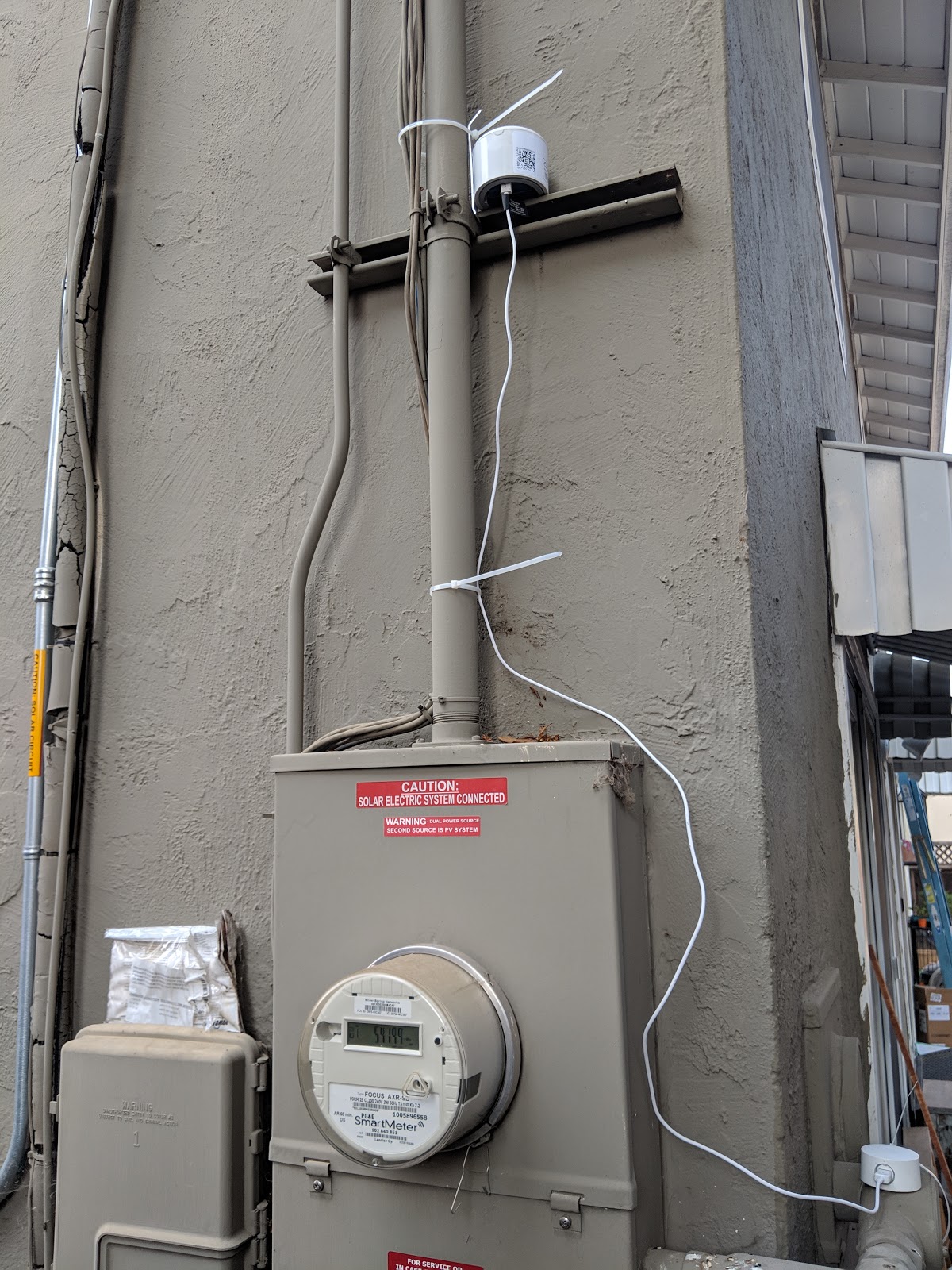
Like Rachio's smart sprinkler system or the Nest outdoor cameras, these new Internet of Things devices come with the smallest set of instructions. Power them up, connect to Wifi and you're essentially on your way. It even came with a Nest branded power supply, which surprised me, but made immediate sense. With the minimal amount of effort, I registered my PurpleAir device and am now broadcasting the AQI from our house to the shared map.

There's no PurpleAir app (at least that I could find) which would make tracking AQI and our personal data easier, but the website works, and mobile site works well enough on my phone. Still seems like a minor oversight for 2018.

Clearly, the avalanche of attention toward hourly AQI levels and scramble for air filters is going to spike and fall with the latest wildfire or other pollution disaster. I may feel in the future that telling the world my air is just fine isn't world changing. But I've always been delighted in being able to see the data and make decisions. That's why Fitbit works. That's why Nest makes sense. That's why I went solar with Sunrun.

The tragedies that have hit California, and are nowhere near done, are going to have impact on families and our entire region for years to come. We should adapt to a world that acts on data and protects those things we can control.

January 1, 2015

10 New Year's Resolutions (for you) for the Year 2015

10 New Year's Resolutions (for you) for the Year 2015

A new year is a somewhat arbitrary point in time to mark change. But tradition has it that we do two things when the calendar turns from December to January. We look back on the previous year, either with pride over accomplishments, or dismissal of bad experiences, and we optimistically expect the best for the coming twelve months.

In years past I've put forth fun predictions for the world in tech. And trust me, I have some predictions, but I'll hold those close to the vest. Working at Google makes predicting the future like cheating. And I won't bore you with a list of my own resolutions for 2015. Instead, I'll suggest (with bias) ten resolutions each of you (and often us too) should take this year to make our online and offline lives even better.

1. Protect yourself and your data from the bad guys.

Seemingly every week, we are seeing news about security breaches at major retail stores, or finding online databases have been impacted. And outside the headlines, bad actors are out there trying to harvest your online information. I recommend protecting yourself by using two-factor authentication wherever possible, trying to avoid the reuse of passwords, and setting up automatic alerts that tell you if your credit cards are being used anywhere, or over a certain dollar amount.

In 2014, I managed nearly 6 million steps on Fitbit.

2. Use intelligent data to make yourself a better person.

Seemingly everyone's New Year's resolution is to go to the gym more or lose weight. But those resolutions tend to fade out after a strong month or so. Instead, find a fitness tracker or application that makes sense to track what you already do, and find a way to increase those numbers. My adoption of Fitbit two and a half years ago helped me lose more than 20 pounds, encouraged me to buy a treadmill, and find the way to walk just about everywhere.

3. Use intelligent data to make your home a smarter one.

Once you know to count your data with services like Fitbit, running your home without data is kind of dumb. By adopting Nest and Sunrun to handle our energy costs, and Rachio to manage our smart sprinkler system, we've not only set ourselves up to save money each month, but we can better predict our use, and make changes when necessary.

Our Solar powered home saves money and saves the air too.

4. If you have money, put it in places with long term benefits.

In 2010, we bought our home, putting out more money than I've ever done. But with rising Silicon Valley real estate prices, that looks like a good investment. In 2011, we refinanced. In 2012, we paid off our cars and, with the exception of our home, were debt free. In 2013, we bought a treadmill, to keep us active, even if not leaving the house. And in 2014, we made two big expenditures: The first being our Sunrun solar system, which will save us more than $65,000 in the lifetime of the 20 year contract, and the second, paying off a home equity line of credit, which was taking $300 a month, every month. We paid it off 28 years early. This year, we're hoping to get rid of our external storage unit, and continuing to take costs off the top.


5. Reduce clutter, be it of physical things or your time.

One of our 'first world problems' is the accumulation of stuff that takes up space. But many of things that occupy space where we live are for temporary enjoyment. I made a choice to ditch physical items for digital ones years ago, and I don't have books or DVDs following me around. Similarly, it makes sense to cut out activities, networks, people or habits that are a time suck for you and may have stopped adding value long ago. Whether it's closing accounts, unfriending, unsubscribing, or just walking away... if you truly miss it, you can always add those things back.

6. See things from another person's perspective.

It's easy, especially online, to divide into two directly opposing camps. What you like is amazing, and what the other person likes stinks. But it's often very interesting to see why someone has made a choice, be it where they choose to spend their time, what hobbies they enjoy, what apps they use or what mobile or computer operating system they've selected. It can't hurt to ask and understand before overwhelming them with your bias.

7. Recognize a lack of diversity hurts everyone, and work to solve it.

There is bias everywhere, obvious or unconscious. The results of generations of bias have led to dramatically skewed workplaces, city makeups, perceptions and manufactured realities. 2014 saw many tech companies open up about their own diverse makeups. Recognizing the issue is just the first step, and being comfortable with the status quo isn't acceptable.

8. Don't read the comments. And if you do, don't respond.

There's a bell curve when it comes to quality commentary, and the fringes of that curve are in charge of most active conversations, be it on mainstream media sites, popular discussion boards, or video networks. Practically every time, you lose brain cells by reading them, and engaging just makes you part of the mess.

9. Do something good for people who need the help more than you do.

Not everyone feels like they can give money to charity, but practically everyone has time. 2014 saw many of my friends get cancer. Another friend lost his 11 year old son to heart disease. Close friends suffered job losses, divorces and messy breakups. The world got Ebola. Adult problems can be a real pain. Find a cause or lend an ear to a friend that needs the help and always be there. The time you give is better than money.

10. Evaluate what you've always been taught and consider whether its true.

Much like bias can be taught from one generation to the next, so can half-truths and pure make believe, from pseudoscience to religion, political leanings and the latest version of history, depending on the author. Put two people in a room and ask them a direct question on a challenging topic, and you'll get wildly different answers. Find out why you'd state yours, and see if a little research could make you update your story.

Starting here, even if you can't get to them all, will have a big impact on you - online and offline, with health, with finance, and well being. You could give yourself a crazy goal that sets you up for disappointment, or you could just start with these. I'm working on each one and have a lot more to do. Good luck to you in 2015.

November 7, 2014

Our Smartphones Have Surpassed Their Role as Computers In Our Pockets

Our Smartphones Have Surpassed Their Role as Computers In Our Pockets

The prevailing mantra holds that as our phones become increasingly smart and constantly connected, that we're walking around with the equivalent of computers in our pocket.

These intelligent devices can do practically everything their PC predecessors could, from email and web browsing to document sharing and creation, music and photos, and any application you can think of. In fact, I'd argue that we're not only seeing people spend more hours with their mobile devices than traditional PCs, they're more functional as well - as the smartphone has surpassed the PC. Ever try taking photos with your iMac? It's tough.

Now, instead of considering these phones and tablets as miniature computers, which are used to access our desktop content on the go, we're seeing the reverse take place. The smartphones are initiating the activity, and the desktop connects us to the results. Instead of many small computers in our pocket, our PCs are essentially larger versions of our phones - and we come to our Web browsers and desktop apps to pick up where our phones left off.

Rachio's Web site is as Functional as the App

Not too long ago, it was common to expect apps to be made for our smartphone platforms that were extensions of our Web experiences. These simple mobile apps were wrappers for our cloud-based data, or simply sucked down web pages and media, but didn't offer experiences that were enhanced by being mobile. It was just a mirror of what you could get on the desktop. However, as the app ecosystem exploded for iOS, Android and other platforms, coding for the smartphone became the primary destination and effort for new companies and ideas.

Automatic's Web dashboard leverages data from the mobile device.

You could see this evolution go in a a three step process, from "Mobile too" to "Mobile first" and in many cases now, "Mobile only." Mobile experiences can't just be a shadow of the desktop version, but instead are now carefully crafted to meet rigid design expectations, with a user experience that adapts for smaller screens, and gets better with understanding of the user's location data or other apps installed on the phone. We're spending more and more time inside of our mobile apps, which can be our primary messaging and sharing vehicle, our second screens while watching TV or using the desktop, or a constant companion - to the point we hold them in our hands as we walk everywhere, or put them out on the table in front of us wherever we may go, waiting for the next chirp to grab our attention.

Fitbit takes its data and makes smart charts and graphs on their site.

The natural evolution of this mobile first, mobile centric reality is that we're now no longer going to our phones to pick up where our desktops left off, but the reverse. And when I do end up in front of a full-sized keyboard and monitor, I'm clamoring for smart Web experiences in my browser that reflect activities that have happened on the phone. If it's a miss, I may end up closing my laptop and picking up my Nexus 5 instead.

For applications that are primarily experienced on mobile, seeing a strong Web interface that contains the same data as on mobile is a pleasant surprise. You can see this difference in the way Fitbit has worked hard to have a great Web experience to mirror mobile, while the Moves app does not. Automatic and Rachio have a workable Web experience to match their mobile version.

Managing the Nest thermostat via the Web - same as the app.

Not too long ago, trying to use the Web and get data on our phones was exasperating. We had subpar experiences, had to make excuses for short email replies, or say we'd get to something when back at the desktop. But now, often, when at the PC, you're pining for what's on the phone - even if you can send texts or make voice and video calls from the browser. It's delightful to see when the two are working in sync, and the desktop experience makes the phone experience better. As a user, I'd be delighted to see the front-end experience for the same shared back-end data become more in sync and know the devices are working well together for every service.

Disclosures: I work at Google, who is behind Android, owns Nest, and makes browsers and apps for desktop and mobile. I work on the Google Analytics team, which has a great web experience and mobile apps for Android and iOS. (The first version of this post incorrectly said Nest didn't have a strong Web interface. I was wrong.)

April 15, 2014

Why Nest Protect Reporting an Emergency Filled Me With Comfort

Why Nest Protect Reporting an Emergency Filled Me With Comfort

/via https://twitter.com/louisgray/status/456120763343327232

This morning, my Nexus 5 chirped with a notification I hadn't seen before. While I was at the office, my Nest application was telling me, in no uncertain terms, that there was an Emergency in the kitchen at home. There was smoke, and the alarm from our Nest Protect smoke alarm was sounding. I called home quickly, and my wife told me, embarrassed, there was simply a small issue with the microwave, and all was fine.

While getting alerted to something you can't immediately do something about is no doubt unsettling, it's also reassuring - especially when you consider the alternative (and status quo) is to not be notified until you come home and your house is ash. The Nest Protect alarm correctly detected smoke, communicated (in English) what the problem was, and notified me immediately on a device I always have with me. And as my wife confirmed, the device was being quite direct with her. "There's smoke in the kitchen," was the message from all our devices around the house.


I Can See Status of My 4 Nest Protects from My Phone

Prior to Google's acquisition of Nest in January, I had purchased four Nest Protect smoke alarms in December, to start an upgrade that felt long overdue. As is recommended by code, our home has smoke detectors in just about every room, and their ancient look and behavior, matched only by their limited abilities and nuisances when functioning, give us something of a love/hate relationship. Their every noisy chirp when batteries ran low had us racing from corner to corner in the house, trying to track down the decaying device, and their overreactions to burnt toast or anything else had us all too eager to leave them simply disconnected - which was no good.

So I was more than happy to take down four of the dusty beige models with no personality and start putting Protects in their place. With a little setup, each of the new devices connected, by Wifi, to one another, and they now hang quietly in our major traffic areas, waiting for any hint of trouble. And one perk, which few talk about, is the Protects' ability to function as a nightlight - providing illumination in near darkness, invaluable for the quiet tiptoeing in the hallways, past sleeping children at night.

Adding the Protects to our home in December seemed like a logical move after getting the Thermostat last year. And while they don't see as much activity as the Thermostat, which is constantly keeping our temperature in check, it's comforting to see their current status in the app, and know that all is well.

Today's "Emergency" was quickly resolved, and I got another update.

There's not much to be excited about when it comes to the world of smoke detectors. But as Nest said when they first introduced the Protect series of smoke alarms, "Safety shouldn't be annoying." Too often, people end up in the same situation we had been, where the alarms in their homes were sitting to the side, with batteries out, or batteries had simply gone out and were useless shells - doing nothing to ensure the safety of the people who needed them to work.

Like Sonos, you can view the status and manage any of the devices by name - usually tied to their location. As we placed Protects in my electronics-heavy office, the hallway between my kids' bedrooms, the kitchen and our living room, it's easy to know which device is following status of each location, and in times of assumed crisis, they work in concert to let you know an action has to be taken.

There's really two ways to do smoke alarms: The old way and the Nest way. Every older smoke alarm in my home is now assumed to be a liability, waiting for its time to be replaced. They don't talk my language, they don't look good, and they aren't equipped for this gadget-centric age. I've never gotten a notification from my older alarms, and I never will. Today's alert - even if it was a small one - confirmed that going with Nest was a good idea. And whether you think I'm biased because I work at Google, and can now count the Nest team as colleagues, consider I paid full retail for these devices (including the thermostat), and did so without any knowledge of an impending buy. That they're now working on our team is actually pretty cool. It's always good to have smart software impact my life.

Disclosures: Nest, as mentioned, is a subsidiary of Google, where I work. I purchased the devices prior to the acquisition, and haven't gotten any kind of discount or any favors for being on the same team now. I just have a bias in favor of products that work well.

March 24, 2014

We've Gone Solar. The Data Already Shows Green Benefits.

We've Gone Solar. The Data Already Shows Green Benefits.

The costs of home ownership extend well beyond the mortgage and annual rites of property tax. Since buying our home in 2010, I've often mildly complained about getting "Benjamin Franklin'd to death" with all the underpinning recurring costs - from water to garbage to energy utilities - and that's not even addressing the repairs you can't just pass off to a willing landlord.

Long on our whimsical 'to do' list has been to consider going solar. We've always known it was good for the environment, to create our own energy and give it back to the power grid, but after months and months of getting notes from PG&E saying we were using well more than our unfair share of electricity, thanks to keeping three young kids warm and in clean clothes and dishes on a daily basis, I made an investment in solar - calling up Sunrun, and getting panels on our roof that will be making energy for at least the next twenty years.

If you're familiar with how PG&E and other utilities do business, they start off your service at a low rate, and the more you use above average, the higher the rate goes. So if you used 2 or 3 times the amount of a typical home your size, you could be paying multiples on top of that per month. We got tired of getting these nasty notes in the mail about how we were wasteful people, and didn't feel PG&E accounted for our having three kids who just loved to get things dirty. So in comes solar and down go our costs.

    
Two views of the solar panels on our home (on a sunny day)

And just like having a Fitbit helps me measure my own habits, and the Nest thermostat has helped us reduce our energy use and track when we use our air conditioning and heating, the availability of data can quickly show us our impact. With Sunrun's solar panels tracking data to their customer portal, I can compare the energy we're creating with our PG&E history showing how much we typically use.

Sunrun shows we're creating greater than 35 kWh daily

With our panels being active just over a week's time, I can see our average kilowatt hours of energy created surpass all but our most active days from the last few months. And our projected electricity bill has dropped from the average of hundreds of dollars a month to zero.

PG&E reports February rarely peaked above 35 kWh in usage.

Where we once owed PG&E money, we're now making it back.

As I've gone through the process of evaluating solar and making a decision on how to invest, many people are curious to how quickly we'll make back our initial costs. What we've managed to do is take a variable bill in the low hundreds a month to a static $22 a month, keeping our line open to PG&E in the event of demand outstripping supply. And that doesn't even consider that energy costs are hardly likely to be stable over the next twenty years. Our long term calculator shows us saving more than $65,000 over the lifetime of the contract, and we should be in the black, so to speak, in five years, if not sooner.

Virtually eliminating our electricity bill has the same kind of relief as you've probably felt when you pay off an existing car loan or send in the final check for a student loan. It cost you money, but now it's behind you, and the next paycheck will stretch out a little further. And if I have to admit it, the panels on top of our roof look pretty cool - it's like getting caps on your teeth to show a little bling to the neighbors. For the first time in a long time, I'm looking forward to our energy bill.

Disclosures: Nest was recently acquired by Google (where I work). I bought my Nest thermostat last year and bought four Nest Protect smoke alarms earlier this year, all at full retail. Also, if I can get you to join Sunrun, I get a referral bonus. So let me know if I can get you on solar, and I can get a few bucks too.

May 23, 2013

Apps and Gadgets Optimizing More of Your Life Data

Apps and Gadgets Optimizing More of Your Life Data

It's been just over a year since I started my experiment with Fitbit, tracking not only my every step daily, but also my weight, learning how I measured up against my peers and against myself. The act of tracking my information, and keeping up with my peers, along with an irrational desire to stay atop virtual leaderboards, led me to lose thirty pounds at peak, and with little dramatic effort, I dropped 7 inches in my waist and have had to rebuy clothes more than once.

But Fitbit hasn't been the only data tracking app I've made part of my life, and I'm looking forward to more, for information truly is power, and as you start to quantify and measure that power, you get results.

If Fitbit is about tracking your activity, how much energy you burn, and how far you get with that effort, it's not too much of a stretch to see Nest's smart thermostat as Fitbit for your home. The attractive Nest dial not only is a small conversation piece in our home, but it has simplified our heating and cooling, letting us manage our home via smartphone and the web, all while getting regular reports on how much we've tasked our utilities.

Okay, thirty pounds is enough. I don't need more badges.

I purchased our Nest thermostat in March of last year, and that means we've gotten through a full twelve months, giving us enough data to check usage year over year. Even with the usual caveats of weather variations, kids needing more laundry done due to more activities, or anything else, it's clear we routinely have saved anywhere from $40 to $100 a month in electricity and gas with Nest, which means we broke even on our $299 purchase within six months.

PG&E Agrees We're Saving Energy and Money

That catapults Nest from the "fun gadget" category to the "real benefits" category. It doesn't take a brain surgeon to say that you use less heat when things warm up, like my monthly Nest Energy statement from April reported, but it does take smart science to learn when my family is in the house, and how to cool or heat our home at the right time, so nothing is wasted.

Monthly variations from Nest hit my email, showing use.

Fitbit and the Nest aren't the only devices that urge you to be better with the delivery of data and smart analysis. Today, I got more excited about a new gadget than I've been in some time, when I stumbled upon the promise of Automatic.com, and their early stage smart driving assistant. The assistant, which you can read more about on their site, sucks down information from your driving behavior, sends it to your phone, and helps you learn how you can change your behavior to save money on gas, and generally be a better driver. It even promises to help diagnose mysterious issues that flare up with everyone's car now and again.

Obviously, living and breathing a world like Google, as I do, we're thinking about data and separating good information from bad all the time. But this isn't a story about Google. It's a story about how smart thinking and critical application of the right information can make your life a better one. You don't need ten posts from me that crow about how Fitbit has made me thinner, but it did. You don't need me to tell you I'm one of the cool kids who has Nest, but I did get one, and I'm very glad I did. In months, after my preorder of the Automatic driving assistant comes through, I bet my driving may change in the same way my walking has - and the same way we don't have our air conditioning and heater constantly blaring.

We're in an interesting time in technology, where we're moving from a counting data for data's sake, and posting it without filters, like the first passes with Last.fm and Foursquare, to a utlity-based model, where the machines and software are getting smarter, teaching us and guiding us to be better. It's really exciting when you think about it - as we move not just from quantitative data, but qualitative data, and present it in such a way that it's not just for the geeks, but for everyone. Bring on more gadgets like this, please.