Silicon Valley Technology Commentary & Archives · Est. 2006 3,045 Posts · 2006–2026

April 19, 2011

April 19, 2011 · 2 MIN READ · BY LOUIS GRAY

Flapon Flaps Into World of Topic Based Social Networking

Flapon Flaps Into World of Topic Based Social Networking

No doubt unperturbed by Liz Gannes' panning of their "Flap On, Flap Off" branding, Flapon introduced itself Monday morning as a life-stream integrated social network aimed to help people find each other based on similar interests and shared topics. The approach, previously tried by the now-defunct Simler, Socialmedian and others, hopes that people's collaboration around mutual interests will encourage positive relationships, and enable people to share insights that bring value to other members of the community.

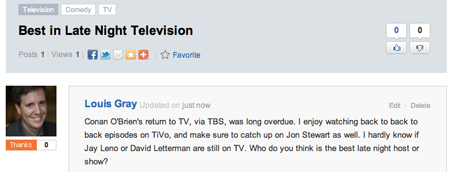
The main area of Flapon is referred to as the Stream. The Stream is comprised of "Flaps" from users on any topic. Essentially, the alpha version presents the public stream of all topics in the central space. Each Flap can be slugged with multiple topics, each of which can be clicked to find other discussions on that topic. And while you can add many different topics to each Flap, and be quite creative in your choice of tagging, Flapon comes bearing a full library of topics. This aids in creation of new content - for example, if you post on Conan O'Brien and want to tag the post as "Comedy", start writing, and like Google Instant, it autopopulates a list of options.

The Flaps Make Streams

A Flap on Late Night TV, Slugged as Comedy, TV and Television

Each item is self contained, getting its own permalink, with statistics on reads, as well as the option to vote posts up and down. You can comment on the original Flap, or reply to extend the conversation. Unsurprisingly, you can click on the profile of each Flap author to gain their bio, and Flap history. If you try hard, you can think of it as being Quora-like, without any leading questions. You just post what you're thinking, tag it, and keep going.

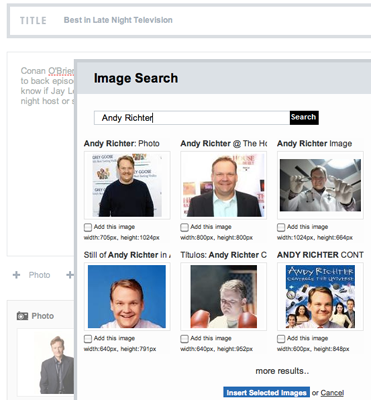
Creating a Flap With Images from Google

In its infancy, you of course won't find answers to every query. Searching for "Baseball" lands a single post on amazing facts. The phrase "Social media" has many dozens, reflecting the service's earliest users.

Assuming one of the core cruxes of social networking is social, it's likely only the bravest of cutting edge early adopters will find themselves posting to Flapon instead of the more popular destinations. The tagging of content is good, as is discovery of new posters and immediacy of feedback, such as posts and views. Addition of photos to each Flap is pretty simple as well, as you can pull from Google's massive image search repository.

If you want to get flapping with Flapon, just head to http://www.flapon.com to check it out. Maybe you'll enjoy the option of talking in more than 140 characters again, or you'll like seeing a public stream in its infancy stages.

April 18, 2011

April 18, 2011 · 4 MIN READ · BY LOUIS GRAY

Sosumi: Apple vs. World for Phones, Tablets & the Future

Sosumi: Apple vs. World for Phones, Tablets & the Future

Apple is not taking the war on iOS lying down. Bleeding from the wounds of a thousand cuts courtesy of the knives from the wide-ranging Android ecosystem, the company is taking on Samsung in the courtroom, targeting the Galaxy series of phones and tablets, just over a year from their initial suit against HTC, months after they sued Amazon for their App Store naming and six months after they sued Motorola for their use of multitouch. It's getting a little busy in Cupertino's legal counsel these days, and without suing their current nemesis, Google, outright, Apple seems to be throwing their significant market weight around. Despite being outnumbered, there's no question they believe they have both might and right on their side.

An early flashpoint in the return of Steve Jobs to Apple was the agreed upon cessation of legal wrangling with Microsoft over the famous "look and feel" lawsuit that claimed Windows had borrowed heavily from the Macintosh. Of course it had. But it was legal, thanks to shoddy early contracts. In the announcement of the stopped legalities, Jobs famously said, "We have to let go of the notion that for Apple to win, Microsoft needs to lose.'"

The ensuing (no joke) 13-plus years have put Apple in the driver's seat versus Microsoft in may places - in market capitalization, and leadership on music players, mobile phones, tablets and sheer brand desire. Microsoft didn't lose, per se, but they didn't have to get the verdict handed down from the courts. The verdict has been handed down in the world of public opinion and choice of quality products that saw the Zune dismissed as a joke and Windows Media become an also-ran, with CEO Steve Ballmer being a lightning rod of futility.

But this time around, Apple is the front-runner. They have market muscle, they have clear differentiation and leadership in hardware and software. They have an amazing app store with high quality software - a combination that is practically unmatched, even as Android has passed Cupertino by in numbers, and quality improves rapidly. This time around, they are not being loose with their contract work, patenting everything under the sun - from the implemented to the theoretical, and they are backing up those patent claims by taking on their competition directly. They refuse to go down without a fight.


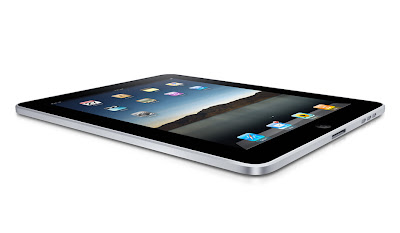
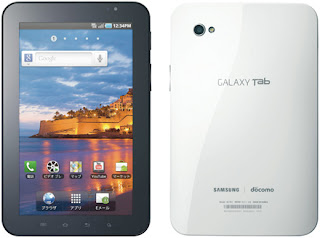
It took Apple to change the way the world interpreted smartphones. It took Apple to introduce a successful tablet. It took Apple to turn the tide against peer to peer free file sharing and to a legitimate music and video store. In the years following their leadership, iTunes has in some ways been lapped by Spotify and other offerings. Android's flexibility means there are many choices in handsets which look remarkably like the iPhone. The Galaxy Tab, my tablet of choice, comes in sizes the iPad doesn't. But the volley of lawsuits smacks of preemptive desperation, not from a company in trouble by any means, but by one that wants to make sure it won't ever be.

In March of 2010, former Sun CEO Jonathan Schwartz wrote a post, titled, in a nod to Jobs, "Good Artists Copy, Great Artists Steal". In the post, he claimed that Apple going after the competition raised their visibility and relevancy to the market.
"Having watched this movie play out many times, suing a competitor typically makes them more relevant, not less. Developers I know aren’t getting less interested in Google’s Android platform, they’re getting more interested – Apple’s actions are enhancing that interest."
I can't say that more users and developers are flocking to Android directly because of Apple's moves, but it is wearing down on the good will that Apple has fostered with the general tech community. In a world where Apple has forged its own path, going practically partner free, owning their own pace and great margins, the rest of the world has been expected to choose a side opposed to their own - be it Android, be it Samsung's BADA OS, be it Blackberry or Microsoft Windows Phone 7 (see Nokia). By choosing to compete with Apple and to develop solutions that mirror the iPhones of the past, it's left them open for such courtroom drama.


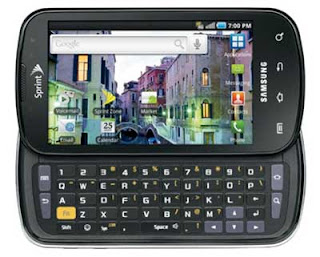
At this point, I probably have nearly as many Samsung devices in my home as Apple devices. From the Galaxy Tab to my Galaxy S powered Epic 4G phone on Sprint and our TVs, I'm looking at Samsung logos many hours a day. So this particular lawsuit doesn't exactly give me the fuzzy feeling that Apple is going to enable a great electronics manufacturer to provide solutions users want.

At my last startup company, the market incumbent sued us immediately following the acquisition of patents they had gained through buying a dying market pioneer. The intent of the suit, which was baseless, was to prevent us from raising a $47 million D round, and to thwart our momentum. The lawsuit was a major distraction for years, and damaged our ability to sell to customers, until it was dismissed years later. I've seen the big market leaders come after the challengers to try and protect their turf, and it has me wary. I can't defend copying and a lack of innovation, but I hope customers don't suffer as the Valley goes to court.

April 17, 2011

April 17, 2011 · 1 MIN READ · BY LOUIS GRAY

Foursquare Day 2011: 3M+ Checkins, The Most Ever

Foursquare Day 2011: 3M+ Checkins, The Most Ever

Saturday April 16th was not just officially recognized as "Foursquare Day" by fourteen different cities this year, including the company's home base of New York City, but it also marked the busiest day the service has ever recorded, with more than three million checkins around the world - the first time this number has been achieved. To give an idea to the magnitude of this achievement, in March of 2010, the company announced its biggest day ever was 275,000 checkins, making Saturday's mark more than 1,000% higher.
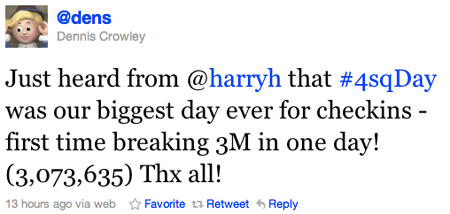
The number was calculated by Foursquare's Harry Heymann, shared by founder Dennis Crowley on Twitter, and repeated by Siobhan Quinn and other team members.


Foursquare reports it now has more than 8 million registered users, achieving the 8 million mark two months after it reached 7 million in February, 6 million in January and 5 million in December. Loosely tracked, the service is expanding around a million new accounts a month, and the number of checkins on Saturday accounted for roughly a checkin per two and a half registered users. Those active on Saturday (myself included) landed the Foursquare Day 2011 badge, an annual tradition.

After initial skepticism on the service, I bet on it following the hire of Blogger's Siobhan Quinn and other smart folks, including Dolapo Falola, formerly of Google, via Thing Labs and AOL. Now even my wife, not an early adopter, is checking in from place to place, and racking up her unfair share of badges. We both counted among Saturday's statistics.
April 17, 2011 · 5 MIN READ · BY LOUIS GRAY

Apple TV, Google TV, TiVo: Crowded Theater, All Good

Apple TV, Google TV, TiVo: Crowded Theater, All Good


There is no one perfect home entertainment gadget. No single gadget manages to record all your favorite shows on demand, has access to the deepest online library for new and older titles, syncs perfectly with services like Netflix and finds all the Web's video at once. Devices ranging from set top boxes like Apple TV, TiVo, Google TV, Roku, and Boxxee, and game centers including the Nintendo Wii, XBox 360 and Sony Playstation, and single-purpose devices like the Slingbox have been working hard to make our entertainment consumption world ideal, but each has its strengths and holes. In our home, we've tried to fill all the holes, and this requires multiple devices, each one finding a perfect niche that can't be replaced by an alternative.

We moved beyond the traditional VCR/DVD world in 2003 with the arrival of our first TiVo DVR -a series one. Since then, we added two newer boxes, the TiVo HD device and the TiVo XL, the bigger brother of the HD, with a terabyte of storage. While the Premiere line of TiVos emerged last year, it wasn't compelling enough an upgrade to make the move, but we're very happy with the pair we have.

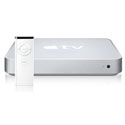
In 2007, with Apple's release of the first generation Apple TV, we snapped up a 40 gigabyte model, which is in use today. Last year, I also picked up the newest model Apple TV, which is stream centric. Meanwhile, last month, after some delay, I added Google TV to the mix with a Logitech Revue. Having seen it panned by much of the tech press, and the multiple demos I'd received falling short, it took some hands-on testing at a local Best Buy to push me to bring it home.

So with all these boxes and companion remotes, how do I choose what to use? Like I mentioned last May with mobile phones, you have to look to the core of each device to find their specialty.

Each Product Has Its Own Core Focus

For the Apple TV, the product's strength is its tie to the iTunes store, specifically, the vast video library which contains more new releases for rent or purchase than alternatives. Google and TiVo have close links to the Amazon video store, but the experience has never matched that of iTunes. When we want to rent a movie for an evening, or purchase a video for my kids to watch (like Toy Story or Cars), it's on the Apple TV.

For TiVo, the product's strength has always been around its ability to time shift videos and record my favorites. A companion benefit is its show guide and search, to find future shows and set them to record. The TiVos upstairs and downstairs run our scheduled programming, and having tried crappy DVRs from Comcast, Dish and others, there's simply no parallel to what TiVo offers.

For Google TV, the device is Web centric, much like Android, of course, and most things Google touches. There's something fun about browsing the Twitter app on the full screen, browsing Web sites, and enjoying YouTube on a screen much larger than a laptop. Tired of my kids running into videos on YouTube with the iPad that weren't exactly my favorite, browsing YouTube myself with them in the room puts me back in control and reduces their digital ADD.

Another much-overlooked feature of Google TV is the ability to browse what's on, automatically sorted by genre. Like most of you with kids, being stuck with baskets of laundry is made much easier when watching something entertaining. Yesterday, owning this task, I checked what movies were on, found Knocked Up just started and amused myself through three baskets of whites and colored laundry. It's similarly very good for finding out what sports are playing anywhere on the TV dial.

Is Google TV Any Good? I Say Absolutely.

As the Google TV is the newest gadget for us, and I've covered Apple TV and TiVo many times before, it's worth saying how good the experience has been. Reading scads of reviews that slammed its utility, or the keyboard remote, I was very surprised how easy it was to setup and how immediate its benefits were. I was most concerned that putting the Logitech box between the TiVo and TV would somehow impact the TiVo's ability to schedule recordings. This turned out not to be a problem at all. The keyboard remote was as simple as any other laptop keyboard, and the Home key always puts me to home base, the center of applications, what's on TV, and is the conduit to browsing the Web.

Even more futuristic is the ability to use any Android device as the remote control with the Google TV app. There's some fun to using the Galaxy Tab as the remote control, with part of the app's screen space devoted to playing the role of trackpad. If you haven't done it, surfing the Web from the tablet to the big screen is pretty cool.

Obviously, each experience could improve some. The Apple TV doesn't know anything about live TV and doesn't have Safari running on it like Chrome does for Google. Google TV makes no attempt to record shows, even though it knows they're on. Meanwhile, the TiVo doesn't really know the real Web exists, despite tie-ins on Premiere with Web widgets and third parties like Netflix, Amazon and Blockbuster. But in our home, if we have an entertainment need to fill, we have a box to do the job.

PR around the Google TV has been pretty light since its initial launch, and one could guess that maybe we'll hear more about the product at Google I/O in May, the one year anniversary of its introduction. Maybe new hardware and TVs will be announced, or new content partnerships, after months of hearing that sites (like Hulu) want to keep Google out of their kitchen. TiVo is due for a big upgrade that maybe makes me update the older boxes. And Apple TV only really gets talked about when you hear rumors that Apple could go the true television route and release an HDTV line. They've certainly got the relationships with suppliers, and the best UI team on the planet. But if you know what you want out of TV, Google TV, Apple TV and TiVo all have a fit and each one brings value. So don't get caught up the tech news grumpiness you find elsewhere. Considering how inexpensive each device is, you just might get all three.